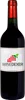
Winery Ronc dai LuchisFranconia
 Red wine



In the mouth this red wine is a powerful.
This wine generally goes well with beef, game (deer, venison) or lamb.
Taste structure of the Franconia from the Winery Ronc dai Luchis
Light | Bold | |
Smooth | Tannic | |
Dry | Sweet | |
Soft | Acidic |
In the mouth the Franconia of Winery Ronc dai Luchis in the region of Friuli-Venezia Giulia is a powerful.
Food and wine pairings with Franconia
Pairings that work perfectly with Franconia



Original food and wine pairings with Franconia

The Franconia of Winery Ronc dai Luchis matches generally quite well with dishes of beef, pasta or lamb such as recipes of sautéed pork with pineapple, salmon cannelloni or lamb chops with lemon and herbs.
Details and technical informations about Winery Ronc dai Luchis's Franconia.
Discover the grape variety: Persan
Persan noir is a grape variety that originated in France (Savoie). It produces a variety of grape specially used for wine making. It is rare to find this grape to eat on our tables. This variety of grape is characterized by small bunches and small grapes. The Persan Noir can be found in several vineyards: South-West, Cognac, Bordeaux, Savoie & Bugey, Provence & Corsica, Rhone Valley, Loire Valley, Beaujolais.
Last vintages of this wine
The best vintages of Franconia from Winery Ronc dai Luchis are 0
Informations about the Winery Ronc dai Luchis
The Winery Ronc dai Luchis is one of of the world's greatest estates. It offers 12 wines for sale in the of Friuli-Venezia Giulia to come and discover on site or to buy online.

The wine region of Friuli-Venezia Giulia
Friuli-Venezia Giulia is an autonomous region in Italy, located in the extreme Northeast of the country, bordered by Austria and Slovenia to the north and east respectively. The eponymous wine region has four DOCGs, twelve DOCs and three PGIs and is best known for its white wine production. 77% of the region's wines are white, one of the highest proportions of any Italian region. The region's wines are distinctly different from other Italian wines in that they are made from non-traditional Grape varieties such as Sauvignon blanc, Riesling and Pinot blanc, as well as typically Italian varieties such as pinot gris and picolit.
The word of the wine: Chaptalization
The addition of sugar at the time of fermentation of the must, an ancient practice, but theorized by Jean-Antoine Chaptal at the dawn of the 19th century. The sugar is transformed into alcohol and allows the natural degree of the wine to be raised in a weak or cold year, or - more questionably - when the winegrower has a harvest that is too large to obtain good maturity.