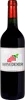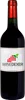
Winery Rio de La LunaCrianza
 Red wine



In the mouth this red wine is a powerful with a nice balance between acidity and tannins.
This wine generally goes well with poultry, beef or veal.
The Crianza of the Winery Rio de La Luna is in the top 60 of wines of Valdepeñas.
Taste structure of the Crianza from the Winery Rio de La Luna
Light | Bold | |
Smooth | Tannic | |
Dry | Sweet | |
Soft | Acidic |
In the mouth the Crianza of Winery Rio de La Luna in the region of Castille is a powerful with a nice balance between acidity and tannins.


Food and wine pairings with Crianza
Pairings that work perfectly with Crianza



Original food and wine pairings with Crianza

The Crianza of Winery Rio de La Luna matches generally quite well with dishes of beef, pasta or veal such as recipes of authentic bolognese sauce (ragù di carne), tagliatelle with mushrooms or tournedos rossini with port sauce.
Details and technical informations about Winery Rio de La Luna's Crianza.
Discover the grape variety: Villard noir
An interspecific cross between Chancellor - 7053 Seibel - and 6905 Seibel or Subéreux, obtained by the Seyve-Villard company, formerly located in Saint Vallier in the Drôme. As with the white Villard - 12375 Seyve-Villard - these were the two most widely planted direct-producer hybrids. Today, Villard noir is on the verge of extinction, although it is listed in the Official Catalogue of Wine Grape Varieties, list A1.
Last vintages of this wine
The best vintages of Crianza from Winery Rio de La Luna are 2012, 2010, 0, 2015 and 2011.
Informations about the Winery Rio de La Luna
The Winery Rio de La Luna is one of of the world's greatest estates. It offers 7 wines for sale in the of Valdepeñas to come and discover on site or to buy online.

The wine region of Valdepeñas
The wine region of Valdepeñas is located in the region of Castille of Spain. Wineries and vineyards like the Domaine Corrales Espinosa or the Domaine Corcovo - Megía e Hijos produce mainly wines red, white and pink. The most planted grape varieties in the region of Valdepeñas are Tempranillo, Verdejo and Airen, they are then used in wines in blends or as a single variety. On the nose of Valdepeñas often reveals types of flavors of cherry, floral or anise and sometimes also flavors of tomatoes, red currant or white pepper.
The wine region of Castille
Castilla-La Mancha is a large region located South and east of the Spanish capital, Madrid. Inexpensive table wines are produced from a variety of Grapes. Higher quality wines are increasingly available, but the region is traditionally known as a source of low quality bulk wine. More than half of Spain's grapes are grown here.
The word of the wine: Tiled
Said of the colour of an evolved wine that has taken on brick and orange hues.