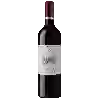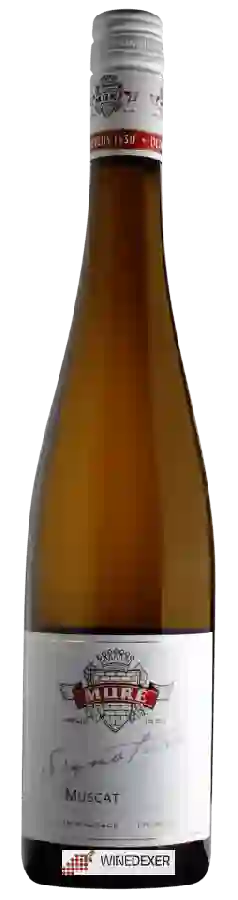
Winery René MuréSignature Muscat
 White wine


This wine generally goes well with spicy food and sweet desserts.
Food and wine pairings with Signature Muscat
Pairings that work perfectly with Signature Muscat


Original food and wine pairings with Signature Muscat
The Signature Muscat of Winery René Muré matches generally quite well with dishes of spicy food or sweet desserts such as recipes of butter chicken or chicken makkhani (india) or cheese cake (white cheese cake) inratable.
Details and technical informations about Winery René Muré's Signature Muscat.
Discover the grape variety: Merlot blanc
The white merlot (or merlau) is a grape variety of Bordeaux origin. It was mainly cultivated in the Graves, Blayais and Bourgeais regions. Merlot blanc is a cross between folle blanche and merlot noir. merlot blanc, although fertile and productive, is a grape variety that is now in decline and is no longer replanted. Its bunches are composed of juicy berries of a green to golden yellow color when they are well ripe, they fear grey rot and drought. The white merlot produces white wines with a low alcohol content and is now part of the Pineau-des-Charentes appellation.
Informations about the Winery René Muré
The Winery René Muré is one of of the world's great estates. It offers 58 wines for sale in the of Alsace to come and discover on site or to buy online.

The wine region of Alsace
Alsace, located in the extreme north-east of France, is Distinguished from other French wine regions by its strong Franco-Germanic influences. These influences are the result of a back-and-forth between the German and French sovereignties over the last few centuries. They can be seen not only in the architecture and culture of Alsace, but also in the wines. Alsace wines are produced under three main appellations: Alsace and Alsace Grand Cru for still white wines (Sweet and Dry), and Crémant d'Alsace for Sparkling wines.
The word of the wine: Draft liquor (champagne)
After blending, the wine is bottled with a liqueur de tirage (a mixture of sugar and wine) and a yeast (selected yeasts). The yeast attacks the sugar and creates carbon dioxide. The fermentation, which lasts about two months, is prolonged by an ageing period (15 months minimum in total). The bottle is capped (some rare vintages are capped with a staple and a cork).