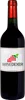
Winery ReiboldReserve Spätburgunder
 Red wine



In the mouth this red wine is a with a nice freshness.
This wine generally goes well with poultry, beef or veal.
Taste structure of the Reserve Spätburgunder from the Winery Reibold
Light | Bold | |
Smooth | Tannic | |
Dry | Sweet | |
Soft | Acidic |
In the mouth the Reserve Spätburgunder of Winery Reibold in the region of Pfalz is a with a nice freshness.
Food and wine pairings with Reserve Spätburgunder
Pairings that work perfectly with Reserve Spätburgunder



Original food and wine pairings with Reserve Spätburgunder

The Reserve Spätburgunder of Winery Reibold matches generally quite well with dishes of beef, veal or game (deer, venison) such as recipes of tournedos rossini, osso bucco of veal or forest rabbit.
Details and technical informations about Winery Reibold's Reserve Spätburgunder.
Discover the grape variety: Noual
This is an ancient grape variety from the southwest that used to be found mainly in the Lot (west of the Cahors vineyard) and Tarn-et-Garonne departments. It is now little present in the vineyard and is therefore in the process of disappearing, although it is listed in the Official Catalogue of Wine Grape Varieties, list A1.
Last vintages of this wine
The best vintages of Reserve Spätburgunder from Winery Reibold are 0
Informations about the Winery Reibold
The Winery Reibold is one of of the world's great estates. It offers 34 wines for sale in the of Pfalz to come and discover on site or to buy online.

The wine region of Pfalz
Pfalz is a key wine producing region in western Germany, located between the Rhein/Rhine river and the low-lying Haardt mountain range (a natural continuation of the Alsatian Vosges). It covers a rectangle of land 45 miles (75km) Long and 15 miles (25km) wide. To the NorthLiesRheinhessen; to the South, the French border and Alsace. In terms of both quality and quantity, Pfalz is one of Germany's most important regions, and one which shows great promise for the future.
The word of the wine: Cep
Grapevine.