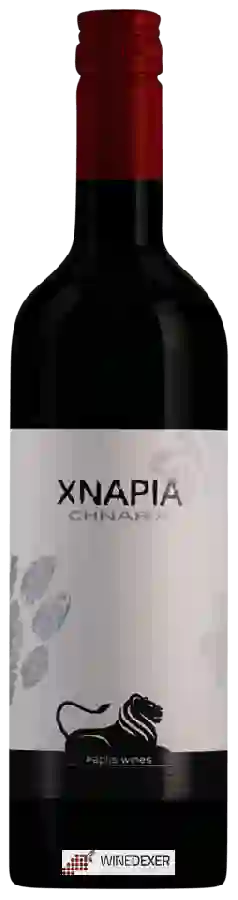
Winery RaptisΧνάρια Снνаяіа Ερυθρό (Footprints Snnaâía Red)
 Red wine


This wine is a blend of 3 varietals which are the Agiorgitiko, the Cabernet-Sauvignon and the Merlot.
This wine generally goes well with poultry, beef or game (deer, venison).
Food and wine pairings with Χνάρια Снνаяіа Ερυθρό (Footprints Snnaâía Red)
Pairings that work perfectly with Χνάρια Снνаяіа Ερυθρό (Footprints Snnaâía Red)



Original food and wine pairings with Χνάρια Снνаяіа Ερυθρό (Footprints Snnaâía Red)


The Χνάρια Снνаяіа Ερυθρό (Footprints Snnaâía Red) of Winery Raptis matches generally quite well with dishes of beef, lamb or game (deer, venison) such as recipes of traditional flemish carbonades, semolina-merguez salad or wild boar with honey.
Details and technical informations about Winery Raptis's Χνάρια Снνаяіа Ερυθρό (Footprints Snnaâía Red).
Discover the grape variety: Agiorgitiko
It is very old in Greece, most certainly originating from the Aegean islands of Santorini(i) to be precise, where it is still the second black variety cultivated today. It is found in Canada (Quebec), in France it is practically unknown, although it is registered in the Official Catalogue of wine grape varieties, list A1.
Last vintages of this wine
The best vintages of Χνάρια Снνаяіа Ερυθρό (Footprints Snnaâía Red) from Winery Raptis are 2015, 0, 2017
Informations about the Winery Raptis
The Winery Raptis is one of of the world's greatest estates. It offers 12 wines for sale in the of Peloponnesos to come and discover on site or to buy online.

The wine region of Peloponnesos
The Peloponnese Peninsula (Peloponnesus) is a large landform on the southern edge of continental Greece. Covered in mountains, rugged plateaus and valleys, the area has an abundance of mesoClimates and terroirs suitable for premium viticulture. Native Grape varieties such as Agiorgitiko, Moschofilero and Mavrodaphne are planted throughout the peninsula. They produce everything from fresh, minerally white wines to Rich, ageworthy reds.
The word of the wine: Aging on lees
Maturing on the lees enhances the stability, aromatic complexity and texture of white wines, which gain in body and volume. This phenomenon is induced by autolysis, the process of self-degradation of the lees.