The Winery Quinta dos Capuchos of Lisboa
Winery Quinta dos Capuchos
The winery offers 16 different wines
3.8


Note - 1Note - 1Note - 1Note - 0.5Note - 0
Its wines get an average rating of 3.8.
It is ranked in the top 86 of the estates of Lisboa.
It is located in Lisboa

The Winery Quinta dos Capuchos is one of the world's great estates. It offers 16 wines for sale in of Lisboa to come and discover on site or to buy online.
Top Winery Quinta dos Capuchos wines

Looking for the best Winery Quinta dos Capuchos wines in Lisboa among all the wines in the region? Check out our tops of the best red, white or effervescent Winery Quinta dos Capuchos wines. Also find some food and wine pairings that may be suitable with the wines from this area. Learn more about the region and the Winery Quinta dos Capuchos wines with technical and enological descriptions.

The top red wines of Winery Quinta dos Capuchos

Food and wine pairings with a red wine of Winery Quinta dos Capuchos

How Winery Quinta dos Capuchos wines pair with each other generally quite well with dishes of beef, pasta or veal such as recipes of burger roll, very simple spaghetti carbonara or veal escalope with marsala.

Organoleptic analysis of red wines of Winery Quinta dos Capuchos

On the nose the red wine of Winery Quinta dos Capuchos. often reveals types of flavors of oak, black fruit. In the mouth the red wine of Winery Quinta dos Capuchos. is a powerful with a nice freshness.

The best vintages in the red wines of Winery Quinta dos Capuchos

  • 2017With an average score of 4.20/5
  • 2009With an average score of 4.10/5
  • 2011With an average score of 4.02/5
  • 2010With an average score of 4.00/5
  • 0With an average score of 3.81/5
  • 2012With an average score of 3.80/5

The grape varieties most used in the red wines of Winery Quinta dos Capuchos.

  • Shiraz/Syrah
  • Touriga Nacional
  • Castelao
  • Cabernet Sauvignon
  • Aragonez

Discovering the wine region of Lisboa

Lisboa (formerly Estremadura) is a prolific wine region located at the Center of Portugal's Atlantic coast. Despite being one of the country's most productive winemaking areas, its name remains relatively obscure in wine terms, as its wines have traditionally been labeled with the names of the local sub-regions, which include Alenquer, Bucelas and Colares. The region is also home to Portugal's capital, Lisbon. The region fell under the VR (Vinho Regional) classification until 2008, when the category was renamed IGP (Indicaciones Geográficas Protegidas) to bring it into line with the rest of Europe.

When the switchover happened, the Portuguese wine authorities took the opportunity to rename the Estremadura appellation as "Lisboa", after Lisbon, which marks the region's southern boundary. There are nine DOCs in Lisboa, but many are more famous for their history than their modern wine industry. The most prestigious wines from the region fall under the Alenquer and Bucelas DOCs. The region's position on the coast gives rise to the broad Terroir that shapes the local wine industry.

The Serra de Montejunto hills run North from Lisbon, and effectively divide Lisboa in half. Along the coast, the Atlantic batters the vineyards with high winds and autumn rains, making viticulture a challenge. The most notable DOC on this side of the hills is Colares, which is more famous for its phylloxera-resistant soils than its robust red wines made from Ramisco. The cool, wet conditions also shape the Lourinhã and Óbidos DOCs, famous for brandy and Sparkling wine, respectively.

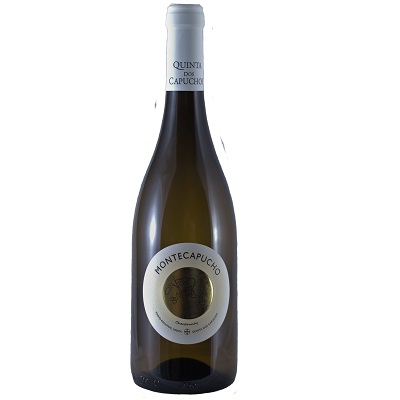
The top white wines of Winery Quinta dos Capuchos

Food and wine pairings with a white wine of Winery Quinta dos Capuchos

How Winery Quinta dos Capuchos wines pair with each other generally quite well with dishes of shellfish, appetizers and snacks or lean fish such as recipes of soupions à la provençale, verrine of beetroot and saint moret or saka-saka.

Organoleptic analysis of white wines of Winery Quinta dos Capuchos

On the nose the white wine of Winery Quinta dos Capuchos. often reveals types of flavors of oak. In the mouth the white wine of Winery Quinta dos Capuchos. is a powerful with a nice freshness.

The best vintages in the white wines of Winery Quinta dos Capuchos

  • 2016With an average score of 4.10/5
  • 0With an average score of 3.87/5
  • 2015With an average score of 3.75/5
  • 2014With an average score of 3.70/5
  • 2013With an average score of 3.70/5

The grape varieties most used in the white wines of Winery Quinta dos Capuchos.

  • Arinto de Bucelas
  • Verdelho
  • Sauvignon Blanc
  • Chardonnay

Discover the grape variety: Aragonez

The top sparkling wines of Winery Quinta dos Capuchos

Food and wine pairings with a sparkling wine of Winery Quinta dos Capuchos

How Winery Quinta dos Capuchos wines pair with each other generally quite well with dishes such as recipes .

The grape varieties most used in the sparkling wines of Winery Quinta dos Capuchos.

  • Arinto de Bucelas

The word of the wine: Interknot

Botanical term for the interval between two nodes or between two leaf insertions on a branch (see merithallus).

The top pink wines of Winery Quinta dos Capuchos

Food and wine pairings with a pink wine of Winery Quinta dos Capuchos

How Winery Quinta dos Capuchos wines pair with each other generally quite well with dishes of beef, lamb or spicy food such as recipes of beef coarse salt, lamb chops with honey and spices or spaghetti all 'amatriciana.

The best vintages in the pink wines of Winery Quinta dos Capuchos

  • 2013With an average score of 3.80/5
  • 0With an average score of 3.60/5

The grape varieties most used in the pink wines of Winery Quinta dos Capuchos.

  • Shiraz/Syrah
  • Touriga Nacional

Discover the grape variety: Castelao

Discover other wineries and winemakers neighboring the Winery Quinta dos Capuchos

Planning a wine route in the of Lisboa? Here are the wineries to visit and the winemakers to meet during your trip in search of wines similar to Winery Quinta dos Capuchos.

Discover the grape variety: Touriga nacional

Most certainly Portuguese, not to be confused with the Touriga Franca also of the same origin. In Portugal, where it is widely cultivated, it is used to produce, among other things, the famous red Porto. It is also found in Uzbekistan, Australia, South Africa, Cyprus, Spain, etc... very little known in France, although it is listed in the Official Catalogue of A1 vines.