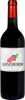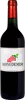
Winery Pünter WeinbauPinot Quadrat
 Red wine
In the mouth this red wine is a with a nice freshness.
This wine generally goes well with poultry, beef or veal.

Taste structure of the Pinot Quadrat from the Winery Pünter Weinbau
Light | Bold | |
Smooth | Tannic | |
Dry | Sweet | |
Soft | Acidic |
In the mouth the Pinot Quadrat of Winery Pünter Weinbau in the region of Zürich is a with a nice freshness.
Food and wine pairings with Pinot Quadrat
Pairings that work perfectly with Pinot Quadrat



Original food and wine pairings with Pinot Quadrat

The Pinot Quadrat of Winery Pünter Weinbau matches generally quite well with dishes of beef, veal or game (deer, venison) such as recipes of stuffed beef rolls, casserons in the country style or rabbit in sauce.
Details and technical informations about Winery Pünter Weinbau's Pinot Quadrat.
Discover the grape variety: Pinot noir
Elegant reds, light in colour with silky tannins, showing strawberry, cherry and raspberry aromas, evolving to forest floor, mushroom and spice with age. Fresh acidity, delicate finish. Star of the Côte d'Or (Romanée-Conti, Chambertin, Volnay), pillar of Champagne (Blanc de Noirs) and signature of Oregon, Central Otago and Sonoma Coast. An early-ripening Burgundian variety, one of the world's greatest.
Informations about the Winery Pünter Weinbau
The Winery Pünter Weinbau is one of of the world's great estates. It offers 16 wines for sale in the of Zürich to come and discover on site or to buy online.

The wine region of Zürich
Largest German-speaking wine canton of Switzerland, 620 ha around the lake. Star Pinot Noir (Blauburgunder): fine, fresh reds with notes of cherry, raspberry, undergrowth and sweet spices, silky tannins and a delicate style. Also light, floral Müller-Thurgau and precise Chardonnay. A unique speciality: Räuschling, a rare native white almost exclusive to the canton ("vine of the lake"), lively with citrus, white flowers and taut minerality.
The word of the wine: Oxidative (breeding)
A method of ageing which aims to give the wine certain aromas of evolution (dried fruit, bitter orange, coffee, rancio, etc.) by exposing it to the air; it is then matured either in barrels, demi-muids or unoaked casks, sometimes stored in the open air, or in barrels exposed to the sun and to temperature variations. This type of maturation characterizes certain natural sweet wines, ports and other liqueur wines.