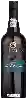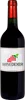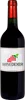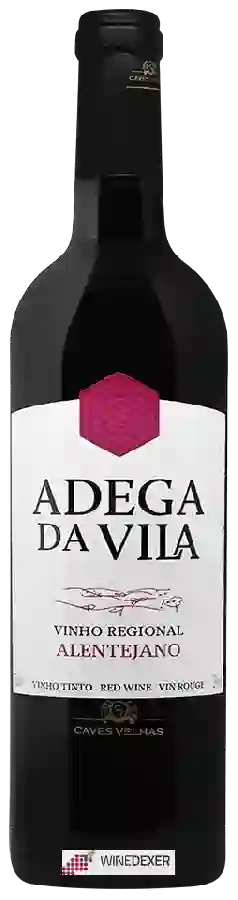
Caves VelhasAdega da Vila Alentejano Tinto
 Red wine


In the mouth this red wine is a powerful.
This wine generally goes well with poultry, beef or veal.

Taste structure of the Adega da Vila Alentejano Tinto from the Caves Velhas
Light | Bold | |
Smooth | Tannic | |
Dry | Sweet | |
Soft | Acidic |
In the mouth the Adega da Vila Alentejano Tinto of Caves Velhas in the region of Alentejano is a powerful.
Food and wine pairings with Adega da Vila Alentejano Tinto
Pairings that work perfectly with Adega da Vila Alentejano Tinto



Original food and wine pairings with Adega da Vila Alentejano Tinto

The Adega da Vila Alentejano Tinto of Caves Velhas matches generally quite well with dishes of beef, pasta or veal such as recipes of hungarian goulash, cannelloni of meat or veal tagine with carrots.
Details and technical informations about Caves Velhas's Adega da Vila Alentejano Tinto.
Discover the grape variety: Catarratto Lucido
Lively and fruity dry whites with a pale golden robe, a lean palate with more marked acidity than Catarratto Comune, showing signature aromas of citrus (lemon), white flowers, white-fleshed fruits and Mediterranean notes. Also the base of fortified Marsala. Star of Alcamo DOC, Etna Bianco DOC and Marsala DOC, signing the great modern Sicilian whites. Tight-cluster variation of Catarratto, native Sicilian white grape.
Last vintages of this wine

The best vintages of Adega da Vila Alentejano Tinto from Caves Velhas are 2017, 2018, 2016, 0 and 2015.
Informations about the Caves Velhas
The Caves Velhas is one of of the world's great estates. It offers 85 wines for sale in the of Alentejano to come and discover on site or to buy online.

The wine region of Alentejano
Star of southern Portugal's great reds, sunny and opulent wines. Typical blends: round fruity Aragonez (Tempranillo), spicy Trincadeira, Touriga Nacional (black fruits, violet), deep teinturier Alicante Bouschet, juicy Castelão. Fleshy reds with notes of plum, black cherry, cocoa and sweet spices, melted tannins. Ample fresh Antão Vaz and Arinto whites.
The word of the wine: De-vatting
Separation of the fermented juice from all solid particles (skin, pips, deposit of lees) by transferring it to a second tank.