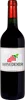
Winery Prinz SalmBingen Spätburgunder Trocken
 Red wine


In the mouth this red wine is a with a nice freshness.
This wine generally goes well with poultry, beef or veal.
Taste structure of the Bingen Spätburgunder Trocken from the Winery Prinz Salm
Light | Bold | |
Smooth | Tannic | |
Dry | Sweet | |
Soft | Acidic |
In the mouth the Bingen Spätburgunder Trocken of Winery Prinz Salm in the region of Rheinhessen is a with a nice freshness.
Food and wine pairings with Bingen Spätburgunder Trocken
Pairings that work perfectly with Bingen Spätburgunder Trocken



Original food and wine pairings with Bingen Spätburgunder Trocken

The Bingen Spätburgunder Trocken of Winery Prinz Salm matches generally quite well with dishes of beef, veal or game (deer, venison) such as recipes of beef pot au feu (grandma's style), tête de veau sauce moi or potjevleesch.
Details and technical informations about Winery Prinz Salm's Bingen Spätburgunder Trocken.
Discover the grape variety: Muscat bleu
An interspecific cross between 15-6 Garnier (villard noir or 18315 Seyve-Villard x Müller-Thurgau) and perle noire or 20347 Seyve-Villard (panse de Provence x 12358 Seyve-Villard), obtained in Switzerland in the 1930s by a nurseryman named Garnier. Muscat Bleu can be found in Germany, Switzerland, Belgium, etc. In France, it is practically unknown. It is listed in the Official Catalogue of Vine Varieties, list A2.
Last vintages of this wine
The best vintages of Bingen Spätburgunder Trocken from Winery Prinz Salm are 0, 2017
Informations about the Winery Prinz Salm
The Winery Prinz Salm is one of of the world's great estates. It offers 54 wines for sale in the of Rheinhessen to come and discover on site or to buy online.

The wine region of Rheinhessen
Rheinhessen is Germany's largest region for producing the quality wines of the Qualitätswein bestimmter Anbaugebiete (QbA) and Prädikatswein designations, with roughly 26,500 hectares (65,000 acres) of Vineyard">Vineyards as of 2014. Many of its most significant viticultural areas are favorably influenced by the Rhine river, which runs aLong its North and eastern borders. The Rhine, along with the Nahe river to the west and the Haardt mountains to its South, form a natural border. Rheinhessen covers an area south of Rheingau, north of Pfalz and east of Nahe, and is located within the Rhineland-Palatinate federal state.
The word of the wine: Cinsault
Cinsault is a southern black grape variety that can be found in the blends of most Mediterranean appellations, but most often as an accessory grape variety. It is undoubtedly most present in certain rosé wines (in Corbières, Côtes-de-Provence, etc.): it gives these wines highly appreciated aromas of strawberry, peach and raspberry. In vin de pays (IGP), it is often vinified on its own, usually as a rosé.