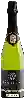
Winery PlatinoPink Moscato
 Sparkling wine



This wine generally goes well with sweet desserts
Food and wine pairings with Pink Moscato
Pairings that work perfectly with Pink Moscato

Original food and wine pairings with Pink Moscato
The Pink Moscato of Winery Platino matches generally quite well with dishes of sweet desserts such as recipes of the coughing cat's apple crumble.
Details and technical informations about Winery Platino's Pink Moscato.
Discover the grape variety: Pé de perdrix
This grape variety would be of Spanish origin, it was in this country mainly used as table grape. The Pé de perdrix has now completely disappeared. It should not be confused with the pied de perdrix, which is the red-tailed côt with black grapes.
Last vintages of this wine
The best vintages of Pink Moscato from Winery Platino are 2017, 0
Informations about the Winery Platino
The Winery Platino is one of of the world's greatest estates. It offers 14 wines for sale in the of La Mancha to come and discover on site or to buy online.

The wine region of La Mancha
The wine region of La Mancha is located in the region of Castille of Spain. Wineries and vineyards like the Domaine Cinco Estrellas or the Domaine Munoz produce mainly wines red, white and pink. The most planted grape varieties in the region of La Mancha are Tempranillo, Cabernet-Sauvignon and Merlot, they are then used in wines in blends or as a single variety. On the nose of La Mancha often reveals types of flavors of cherry, mint or jasmine and sometimes also flavors of sweet tobacco, graphite or grass.
The wine region of Castille
Castilla-La Mancha is a large region located South and east of the Spanish capital, Madrid. Inexpensive table wines are produced from a variety of Grapes. Higher quality wines are increasingly available, but the region is traditionally known as a source of low quality bulk wine. More than half of Spain's grapes are grown here.
The word of the wine: Sweet
Generic term for wines containing residual sugar (natural sugars in the grapes that have not been transformed into alcohol). It is also used to describe a wine with a dominantly sweet flavour, without further explanation.