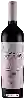
Winery Pingo DoceSyrah - Alicante Bouschet
 Red wine



In the mouth this red wine is a powerful with a lot of tannins present in the mouth.
This wine generally goes well with poultry, beef or veal.
Taste structure of the Syrah - Alicante Bouschet from the Winery Pingo Doce
Light | Bold | |
Smooth | Tannic | |
Dry | Sweet | |
Soft | Acidic |
In the mouth the Syrah - Alicante Bouschet of Winery Pingo Doce in the region of Península de Setúbal is a powerful with a lot of tannins present in the mouth.
Wine flavors and olphactive analysis



On the nose the Syrah - Alicante Bouschet of Winery Pingo Doce in the region of Península de Setúbal often reveals types of flavors of non oak, oak or spices.
Food and wine pairings with Syrah - Alicante Bouschet
Pairings that work perfectly with Syrah - Alicante Bouschet



Original food and wine pairings with Syrah - Alicante Bouschet

The Syrah - Alicante Bouschet of Winery Pingo Doce matches generally quite well with dishes of beef, pasta or veal such as recipes of beef with mustard, light lasagne without béchamel sauce or casserons in the country style.
Details and technical informations about Winery Pingo Doce's Syrah - Alicante Bouschet.
Discover the grape variety: Feteasca neagra
A very old variety native to Romania, found much more in Romanian Moldavia and Wallachia, almost unknown in France, but registered in the Official Catalogue of Wine Grape Varieties, list A2. According to Viala and Vermorel, it is the black form of feteasca alba. It should not be confused with feteasca regala.
Last vintages of this wine
The best vintages of Syrah - Alicante Bouschet from Winery Pingo Doce are 2020, 2017, 0, 2018 and 2019.
Informations about the Winery Pingo Doce
The Winery Pingo Doce is one of of the world's greatest estates. It offers 99 wines for sale in the of Península de Setúbal to come and discover on site or to buy online.

The wine region of Península de Setúbal
Setúbal Peninsula (also known as Península de Setúbal) is the Portuguese wine region immediately southeast of Lisbon, across the Tejo estuary. The Terroir in the area ranges from sandy coastal plains to the craggy, limestone-rich Serra Arribida hills. The area is known for its Dry red wines made from Castelão, and for its fortified wines and Sweet Moscatel de Setúbal. The wines produced here are made under three titles: two DOCs, Palmela and Setúbal, and one IGP.
The word of the wine: Ugni blanc
White grape variety of Italian origin, and the main white variety grown in France. Its large bunches give fine, light and lively wines, suitable for distillation: today it is the main variety for making cognac and armagnac. Ugni blanc, which is a little richer in alcohol when grown in Mediterranean regions, is used in the blending of the Provence and Corsica appellations, often in association with other grape varieties that bring aromas and structure, such as clairette, grenache blanc or sauvignon. Ugni blanc is also used, on a secondary basis, in the production of certain white wines in Gironde (AOC Bordeaux, Entre-deux-Mers, etc.).