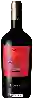
Winery PilandroCentanni Barbera
 Red wine


In the mouth this red wine is a powerful with a nice freshness.
This wine generally goes well with pork, poultry or veal.
Taste structure of the Centanni Barbera from the Winery Pilandro
Light | Bold | |
Smooth | Tannic | |
Dry | Sweet | |
Soft | Acidic |
In the mouth the Centanni Barbera of Winery Pilandro in the region of Veneto is a powerful with a nice freshness.
Food and wine pairings with Centanni Barbera
Pairings that work perfectly with Centanni Barbera



Original food and wine pairings with Centanni Barbera


The Centanni Barbera of Winery Pilandro matches generally quite well with dishes of pasta, veal or pork such as recipes of leek and salmon lasagna, potjevleesch (meat in a pot) or pork roll with tomato sauce.
Details and technical informations about Winery Pilandro's Centanni Barbera.
Discover the grape variety: Mondeuse noire
Cultivated for a very long time in Savoie, it is not the black form of mondeuse blanche and Mondeuse grise is a natural mutation of mondeuse noire. According to Thierry Lacombe (I.N.R.A./Montpellier), the latter is the result of a natural intraspecific crossing between the black tressot and the white mondeuse. Mondeuse grise and Mondeuse noire are both registered in the official catalogue of wine grape varieties, list A1.
Last vintages of this wine

The best vintages of Centanni Barbera from Winery Pilandro are 0, 2015
Informations about the Winery Pilandro
The Winery Pilandro is one of of the world's greatest estates. It offers 29 wines for sale in the of Veneto to come and discover on site or to buy online.

The wine region of Veneto
Veneto is an important and growing wine region in northeastern Italy. Veneto is administratively Part of the Triveneto area, aLong with its smaller neighbors, Trentino-Alto Adige and Friuli-Venezia Giulia. In terms of geography, culture and wine styles, it represents a transition from the Alpine and Germanic-Slavic end of Italy to the warmer, drier, more Roman lands to the South. Veneto is slightly smaller than the other major Italian wine regions - Piedmont, Tuscany, Lombardy, Puglia and Sicily - but it produces more wine than any of them.
The word of the wine: Virile
Said of a robust, full-bodied wine and, in general, of wines reputed to be powerful in reference to masculine virility.