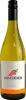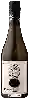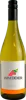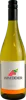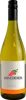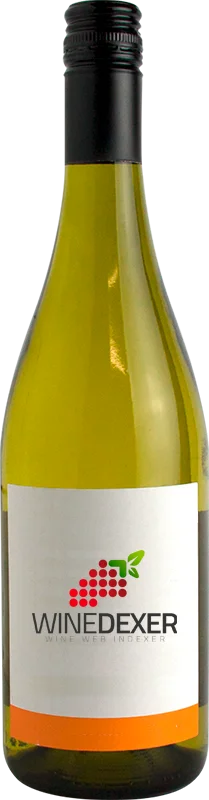
Winery Pewal WeineMuskateller Trocken
 White wine


This wine generally goes well with spicy food and sweet desserts.
Food and wine pairings with Muskateller Trocken
Pairings that work perfectly with Muskateller Trocken


Original food and wine pairings with Muskateller Trocken
The Muskateller Trocken of Winery Pewal Weine matches generally quite well with dishes of spicy food or sweet desserts such as recipes of pasta with broccoli or rice with milk.
Details and technical informations about Winery Pewal Weine's Muskateller Trocken.
Discover the grape variety: Len de l’El
The Len de l'El Blanc is a grape variety that originated in France (Tarn). It produces a variety of grape specially used for wine making. It is rare to find this grape to eat on our tables. This variety of grape is characterized by large bunches of grapes of medium size. The Len de l'El Blanc can be found grown in these vineyards: South West, Cognac, Bordeaux, Armagnac, Rhone Valley, Provence & Corsica.
Last vintages of this wine

The best vintages of Muskateller Trocken from Winery Pewal Weine are 2016, 0, 2015, 2014 and 2013.
Informations about the Winery Pewal Weine
The Winery Pewal Weine is one of of the world's greatest estates. It offers 15 wines for sale in the of Niederösterreich to come and discover on site or to buy online.

The wine region of Niederösterreich
Niederösterreich, or Lower Austria, is a wine region in the Northeast of Austria bordering Slovakia and the Czech Republic. It is the country's largest wine region, both geographically and in terms of production. There are around 28,000 hectares (69,000 acres) of vineyards. These are responsible for roughly half of Austria's total wine output.
The wine region of Weinland
Weinviertel DAC – whose name translates as "wine quarter" – is an appellation in Niederösterreich (Lower Austria). It is by far the largest Districtus Austriae Controllatus wine region in Austria. It was also the first Austrian wine region to be given that title, in 2002, with a DAC Reserve designation added in 2009. The designation applies only to white wines from the Grüner Veltliner Grape variety.
The word of the wine: Tired
Wine that is too old, faded or has suffered from handling such as racking or bottling. In the first case it is too late, in the second case the wine must be put to rest for a few weeks in the cellar.