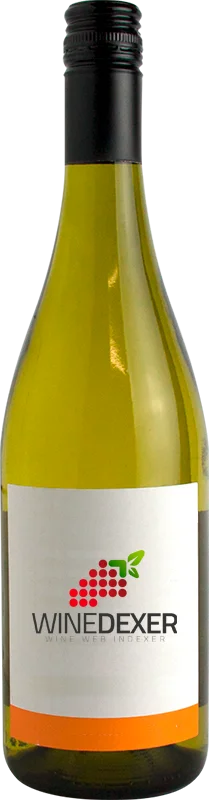
Winery Peter HohnHochgewächs Trocken Riesling
 White wine
In the mouth this white wine is a with a nice freshness.
This wine generally goes well with pork, poultry or shellfish.
Taste structure of the Hochgewächs Trocken Riesling from the Winery Peter Hohn
Light | Bold | |
Dry | Sweet | |
Soft | Acidic |
In the mouth the Hochgewächs Trocken Riesling of Winery Peter Hohn in the region of Mittelrhein is a with a nice freshness.
Food and wine pairings with Hochgewächs Trocken Riesling
Pairings that work perfectly with Hochgewächs Trocken Riesling



Original food and wine pairings with Hochgewächs Trocken Riesling


The Hochgewächs Trocken Riesling of Winery Peter Hohn matches generally quite well with dishes of pork, shellfish or spicy food such as recipes of macaroonade from sète, mussels with rosemary and barbecue or baked falafels.
Details and technical informations about Winery Peter Hohn's Hochgewächs Trocken Riesling.
Discover the grape variety: Riesling
White Riesling is a grape variety that originated in France (Alsace). It produces a variety of grape specially used for the elaboration of wine. It is rare to find this grape to eat on our tables. This variety of grape is characterized by small bunches, and small grapes. White Riesling can be found in many vineyards: Alsace, Loire Valley, Languedoc & Roussillon, Lorraine, Provence & Corsica, Rhone Valley, Savoie & Bugey, Beaujolais, South West.
Informations about the Winery Peter Hohn
The Winery Peter Hohn is one of of the world's greatest estates. It offers 11 wines for sale in the of Mittelrhein to come and discover on site or to buy online.

The wine region of Mittelrhein
Mittelrhein is one of Germany's smaller wine regions, with around 468 hectares (1,156 acres) under Vine. A Long, thin region, it follows the course of the Rhine river between Rheinhessen/bingen">Bingen and Bonn, a distance of about 100 kilometers (60 miles) as the crow flies. At its Southern end, the region abuts the western edge of Rheinhessen and northern limits of the Nahe. It also intersects with the Mosel and Ahr regions, where their respective rivers Flow into the Rhine.
The word of the wine: Character
Said of a typical wine that stands out for its originality. Used in the plural, it refers to all the organoleptic components of a wine (flavours and tactile sensations).