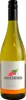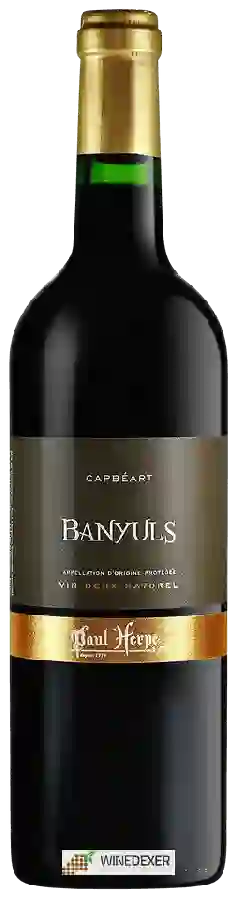
Winery Paul HerpeCapbéart Banyuls
 Natural sweet wine



This wine generally goes well with beef and mature and hard cheese.

Food and wine pairings with Capbéart Banyuls
Pairings that work perfectly with Capbéart Banyuls


Original food and wine pairings with Capbéart Banyuls
The Capbéart Banyuls of Winery Paul Herpe matches generally quite well with dishes of beef or mature and hard cheese such as recipes of quick meatloaf or matouille or hot tome des bauges (savoie).
Details and technical informations about Winery Paul Herpe's Capbéart Banyuls.
Discover the grape variety: Jurançon
Light, fruity reds with a pale ruby colour, soft tannins, and an airy palate with moderate acidity, offering red-fruit aromas and herbaceous notes. Productive. Today marginal, surviving in a few heritage parcels in Béarn and Bigorre. Not to be confused with the Jurançon AOC (white wines). A synonym of Jurançon noir, a French black variety native to the South-West.
Informations about the Winery Paul Herpe
The Winery Paul Herpe is one of of the world's greatest estates. It offers 51 wines for sale in the of Banyuls to come and discover on site or to buy online.

The wine region of Banyuls
AOC natural sweet wine of the Catalan Côte Vermeille, spectacular schist terrace vineyards facing the Mediterranean. Black Grenache fortified with alcohol (min. 50%, min. 75% in Grand Cru).
The wine region of Languedoc-Roussillon
Largest single French vineyard, dominated by sunny, generous reds. Spicy Syrah, candied Grenache (ripe fruit, garrigue), structured Carignan, deep Mourvèdre, supple Cinsault. Stars: structured Corbières, Minervois, Faugères, Saint-Chinian; round Côtes-du-Roussillon. Legendary vins doux naturels: Banyuls and Maury (fortified Grenache) with notes of cocoa, fig, prune.
The word of the wine: Film maceration
A technique that consists of leaving the grapes to macerate in the open air at a low temperature before fermentation, thus enhancing the aromatic expression of the wine.