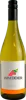
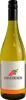
Winery Patrick CoulboisPouilly-Fumé 'Les Cornets'
 White wine
This wine generally goes well with pork, vegetarian or shellfish.
Food and wine pairings with Pouilly-Fumé 'Les Cornets'
Pairings that work perfectly with Pouilly-Fumé 'Les Cornets'



Original food and wine pairings with Pouilly-Fumé 'Les Cornets'


The Pouilly-Fumé 'Les Cornets' of Winery Patrick Coulbois matches generally quite well with dishes of pork, shellfish or spicy food such as recipes of sauté of pork with cider, valencian paella or pad thai.
Details and technical informations about Winery Patrick Coulbois's Pouilly-Fumé 'Les Cornets'.
Discover the grape variety: Gravesina
We do not know exactly where this grape variety comes from. It can be found in Austria, Romania, northern Italy, Croatia, Serbia, Hungary, Bulgaria, the Czech Republic, Slovakia, Russia, etc. It is practically unknown in France. In Spain, Borba is said to be identical to the Italian Riesling.
Informations about the Winery Patrick Coulbois
The Winery Patrick Coulbois is one of of the world's greatest estates. It offers 5 wines for sale in the of Pouilly-Fumé to come and discover on site or to buy online.

The wine region of Pouilly-Fumé
The wine region of Pouilly-Fumé is located in the region of Haute Loire of Loire Valley of France. Wineries and vineyards like the Domaine Didier Dagueneau (Louis-Benjamin Dagueneau) or the Domaine de Ladoucette produce mainly wines white and red. The most planted grape varieties in the region of Pouilly-Fumé are Chenin blanc, Chardonnay and Cabernet franc, they are then used in wines in blends or as a single variety. On the nose of Pouilly-Fumé often reveals types of flavors of earth, black currant or fennel and sometimes also flavors of lime zest, banana or fresh cut grass.
The wine region of Loire Valley
The Loire Valley is a key wine region in western France. It follows the course of the Loire River on its Long journey through the heart of France, from the inland hills of the Auvergne to the plains of the French Atlantic coast near Nantes (Muscadet country). Important in terms of quantity and quality, the region produces large quantities (about 4 million h/l each year) of everyday wines, as well as some of France's greatest wines. Diversity is another of the region's major assets; the styles of wine produced here range from the light, tangy Muscadet to the Sweet, honeyed Bonnezeaux, the Sparkling whites of Vouvray and the juicy, Tannic reds of Chinon and Saumur.
The word of the wine: Muscat blanc à petits grains
A white grape variety cultivated since antiquity on the shores of the Mediterranean, it is considered the noblest of the muscats. It is mainly used to make sweet wines, often from mutage. In France, it is the sole variety used in many natural sweet wines: muscat-de-frontignan, muscat-de-mireval, muscat-de-lunel, muscat-de-saint-jean-de-minervois, muscat-de-beaumes-de-venise, muscat-du-cap-corse. Combined with Muscat d'Alexandrie, it gives Muscat-de-Rivesaltes. It is also used to make sparkling white wines (clairette-de-die; moscato d'asti and asti spumante in Italy) and dry wines (alsace-muscat). Powerfully aromatic and complex, its wines evoke fresh grapes, roses, exotic fruits, citrus fruits and spices.