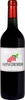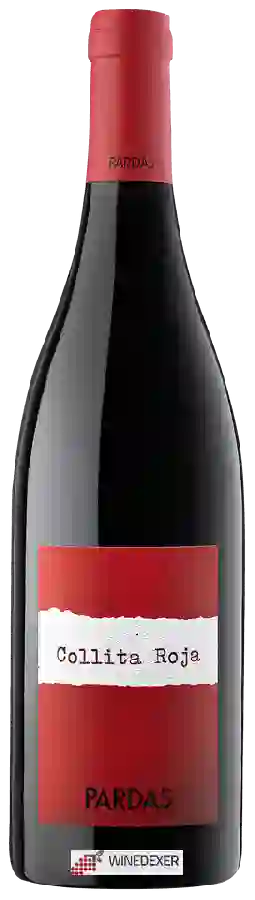
Winery PardasCollita Roja
 Red wine



In the mouth this red wine is a powerful with a nice balance between acidity and tannins.
This wine generally goes well with poultry, beef or veal.

Taste structure of the Collita Roja from the Winery Pardas
Light | Bold | |
Smooth | Tannic | |
Dry | Sweet | |
Soft | Acidic |
In the mouth the Collita Roja of Winery Pardas in the region of Catalogne is a powerful with a nice balance between acidity and tannins.
Wine flavors and olphactive analysis


On the nose the Collita Roja of Winery Pardas in the region of Catalogne often reveals types of flavors of non oak, earth or oak and sometimes also flavors of red fruit, black fruit.
Food and wine pairings with Collita Roja
Pairings that work perfectly with Collita Roja



Original food and wine pairings with Collita Roja

The Collita Roja of Winery Pardas matches generally quite well with dishes of beef, pasta or veal such as recipes of beef fillet in a crust, spaghetti with shrimp and cream or flights in the wind à la provençale.
Details and technical informations about Winery Pardas's Collita Roja.
Discover the grape variety: Ansonica
Structured and full-bodied dry whites with a pale golden colour, broad palate and moderate acidity, with signature aromas of almond (hallmark), yellow fruit (pear, peach, apricot), white flowers and saline marine notes. A sunny Mediterranean profile. Pillar of dry Sicilian whites and traditional Marsala, also signing the Ansonica Costa dell'Argentario DOC in Tuscany and the island of Elba. An indigenous white variety from Sicily (known as Inzolia).
Last vintages of this wine
The best vintages of Collita Roja from Winery Pardas are 2008, 2015, 2011, 2014 and 2013.
Informations about the Winery Pardas
The Winery Pardas is one of of the world's greatest estates. It offers 11 wines for sale in the of Penedès to come and discover on site or to buy online.

The wine region of Penedès
Historic cradle of Cava (95% of Spanish output, centred on Sant Sadurní d'Anoia): traditional-method sparklers, convivial and brioche-like. Indigenous trilogy: signature Xarel-lo (body, herbaceous and almondy notes), Macabeo (apple, freshness), Parellada (floral elegance). Still wines ~80% white from the same grapes, straight and accessible. Also sunny Garnacha, Cabernet and Pinot Noir.
The wine region of Catalogne
Cradle of Cava (~95% of Spanish output, traditional method): Macabeo, Xarel-lo, Parellada trilogy, fine fruity bubble. Quality peak in Priorat DOCa: dense, mineral reds on llicorella (schist), old-vine Garnacha and Cariñena with black fruit, garrigue notes, firm tannins. Also Penedès, fleshy Montsant, sunny Empordà, Costers del Segre. Mediterranean.
The word of the wine: Bâtonnage
A very old technique that has come back into fashion in modern oenology, which consists of shaking the white wine in the barrels at the end of fermentation, or after fermentation, with a stick or a flail, in order to suspend the fine lees composed of yeasts at the end of their activity. This process is sometimes used for red wines.