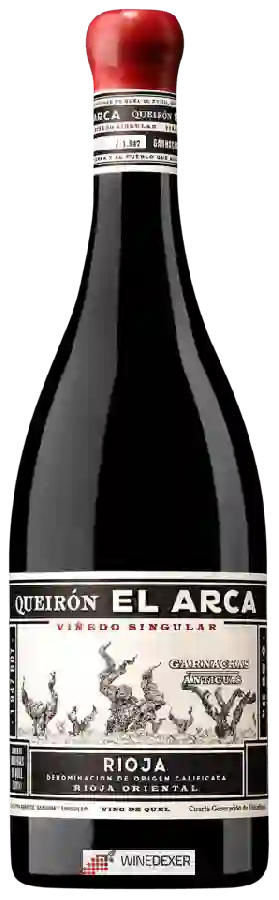
Winery OntañonQueirón El Arca Garnachas
 Red wine


In the mouth this red wine is a powerful with a nice freshness.
This wine generally goes well with poultry, beef or game (deer, venison).
Taste structure of the Queirón El Arca Garnachas from the Winery Ontañon
Light | Bold | |
Smooth | Tannic | |
Dry | Sweet | |
Soft | Acidic |
In the mouth the Queirón El Arca Garnachas of Winery Ontañon in the region of Rioja is a powerful with a nice freshness.
Food and wine pairings with Queirón El Arca Garnachas
Pairings that work perfectly with Queirón El Arca Garnachas



Original food and wine pairings with Queirón El Arca Garnachas


The Queirón El Arca Garnachas of Winery Ontañon matches generally quite well with dishes of beef, pasta or lamb such as recipes of monkfish tail with white butter, farfalle with gorgonzola or lamb curry with coconut milk.
Details and technical informations about Winery Ontañon's Queirón El Arca Garnachas.
Discover the grape variety: Loin de l'oeil
This variety is most certainly from the Tarn region, more precisely from Gaillac, and is registered in the Official Catalogue of wine grape varieties, list A1. It is not found in any other French wine-growing region and is virtually unknown abroad.
Last vintages of this wine
The best vintages of Queirón El Arca Garnachas from Winery Ontañon are 0, 2017
Informations about the Winery Ontañon
The Winery Ontañon is one of of the world's great estates. It offers 76 wines for sale in the of Rioja to come and discover on site or to buy online.

The wine region of Rioja
Star of great Spanish reds: signature Tempranillo, elegant and complex, with notes of ripe cherry, plum, leather, vanilla and tobacco from American oak ageing. Classification by age: fruity Joven, balanced Crianza, ample Reserva, deep, silky Gran Reserva (5 years, 2 in barrel). Some fresh Viura whites and generous rosés. Spain's first DOCa (1991), 3 sub-zones (Alta, Alavesa, Oriental), 93.
The word of the wine: Density per hectare
Number of vines per hectare. For the same yield, a vine planted with 3,000 vines per hectare bears many more bunches (per vine) than a vine planted with 10,000. The grapes will therefore be less rich in sugar and polyphenols (tannins, aromas...).