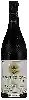
Winery MontreynaudCote De Nuits Villages
 Red wine
In the mouth this red wine is a with a nice freshness.
This wine generally goes well with poultry, beef or veal.

Taste structure of the Cote De Nuits Villages from the Winery Montreynaud
Light | Bold | |
Smooth | Tannic | |
Dry | Sweet | |
Soft | Acidic |
In the mouth the Cote De Nuits Villages of Winery Montreynaud in the region of Rhone Valley is a with a nice freshness.
Food and wine pairings with Cote De Nuits Villages
Pairings that work perfectly with Cote De Nuits Villages



Original food and wine pairings with Cote De Nuits Villages

The Cote De Nuits Villages of Winery Montreynaud matches generally quite well with dishes of beef, veal or game (deer, venison) such as recipes of authentic bolognese sauce (ragù di carne), tripe in the style of caen or salmon and goat cheese quiche.
Details and technical informations about Winery Montreynaud's Cote De Nuits Villages.
Discover the grape variety: Mourvèdre
Powerful, deep reds with firm tannins and dense texture, showing aromas of blackberry, leather, garrigue, black pepper, liquorice and animal notes (game, forest floor) with age. Star of Bandol AOC as a single variety and pillar of Châteauneuf-du-Pape, Gigondas and Costières blends. Also in GSM in Languedoc and Australia. A late-ripening variety of Spanish origin (Mataró/Monastrell).
Informations about the Winery Montreynaud
The Winery Montreynaud is one of of the world's greatest estates. It offers 19 wines for sale in the of Rhone Valley to come and discover on site or to buy online.

The wine region of Rhone Valley
France's 2nd-largest AOC vineyard, two complementary worlds. Northern: pure Syrah in signature reds (Côte-Rôtie, Hermitage, Cornas), deep and peppery with blackberry, violet, black olive and smoked bacon notes, exceptional ageing. Opulent Viognier whites (Condrieu, apricot, flowers) and ample Marsanne-Roussanne. Southern: sun-soaked Grenache blends at Châteauneuf, Gigondas, Vacqueyras (candied fruit, garrigue).
The word of the wine: Deposit
Solid particles that can naturally coat the bottom of a bottle of wine. It is rather a guarantee that the wine has not been mistreated: in fact, to avoid the natural deposit, rather violent processes of filtration or cold passage (- 7 or - 8 °C) are used in order to precipitate the tartar (the small white crystals that some people confuse with crystallized sugar: just taste to dissuade you from it)