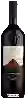
Winery MonteforcheVecchie Varietà Rosso
 Red wine



In the mouth this red wine is a powerful.
This wine generally goes well with beef, game (deer, venison) or lamb.
Taste structure of the Vecchie Varietà Rosso from the Winery Monteforche
Light | Bold | |
Smooth | Tannic | |
Dry | Sweet | |
Soft | Acidic |
In the mouth the Vecchie Varietà Rosso of Winery Monteforche in the region of Veneto is a powerful.
Wine flavors and olphactive analysis

Food and wine pairings with Vecchie Varietà Rosso
Pairings that work perfectly with Vecchie Varietà Rosso



Original food and wine pairings with Vecchie Varietà Rosso

The Vecchie Varietà Rosso of Winery Monteforche matches generally quite well with dishes of beef, pasta or lamb such as recipes of lomo saltado, pasta with veal stock sauce or uzbek pilaf.
Details and technical informations about Winery Monteforche's Vecchie Varietà Rosso.
Discover the grape variety: Marzemino
A very old variety grown in northern Italy and recently in Sardinia. It can also be found in Greece, New Zealand, etc. In France it is practically unknown. It is most certainly related to Teroldego and Refosco dal Pedunculo Rosso and is said to be the brother of Lagrein, all three Italian varieties. It is also related to completer.
Last vintages of this wine
The best vintages of Vecchie Varietà Rosso from Winery Monteforche are 2015, 0
Informations about the Winery Monteforche
The Winery Monteforche is one of of the world's great estates. It offers 13 wines for sale in the of Veneto to come and discover on site or to buy online.

The wine region of Veneto
Veneto is an important and growing wine region in northeastern Italy. Veneto is administratively Part of the Triveneto area, aLong with its smaller neighbors, Trentino-Alto Adige and Friuli-Venezia Giulia. In terms of geography, culture and wine styles, it represents a transition from the Alpine and Germanic-Slavic end of Italy to the warmer, drier, more Roman lands to the South. Veneto is slightly smaller than the other major Italian wine regions - Piedmont, Tuscany, Lombardy, Puglia and Sicily - but it produces more wine than any of them.
The word of the wine: Gravelle
Term designating the deposit of tartar crystals in bottled white wines.