The Domaine Monastrel of Minervois of Languedoc-Roussillon
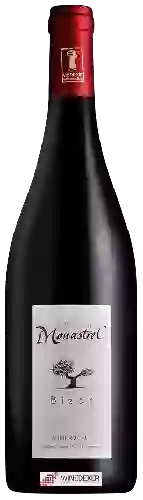
The Domaine Monastrel is one of the best wineries to follow in Minervois.. It offers 7 wines for sale in of Minervois to come and discover on site or to buy online.
Looking for the best Domaine Monastrel wines in Minervois among all the wines in the region? Check out our tops of the best red, white or effervescent Domaine Monastrel wines. Also find some food and wine pairings that may be suitable with the wines from this area. Learn more about the region and the Domaine Monastrel wines with technical and enological descriptions.
How Domaine Monastrel wines pair with each other generally quite well with dishes of beef, pasta or veal such as recipes of roast beef with caramelized onion, pasta with sausage or tête de veau sauce moi.
In the mouth the red wine of Domaine Monastrel. is a powerful with a nice balance between acidity and tannins.
Minervois is an appellation for distinctive red wines from the western Languedoc region of France. In general, they are softer than those produced in the Corbières, just to the South. The Minervois appellation also covers rosé and white wines. The predominant Grape varieties used in AOC Minervois wines are Grenache, Syrah and Mourvèdre.
Together with the rarer Lledoner Pelut (or Lladoner Pelut), they must make up at least 60% of the blend. Carignan and Cinsaut are Part of the supporting wines that can represent 40% of the blend. The white wines of the appellation vary considerably in quality and style. They are made from the grape varieties Vermentino, Roussanne, Marsanne, Bourboulenc and Grenache Blanc.
How Domaine Monastrel wines pair with each other generally quite well with dishes of pasta, vegetarian or poultry such as recipes of pasta with tuna and laughing cow, mushroom, bacon and gruyere quiche or ham croquette with purée.
Roussane is a white grape variety, planted on an area of more than 700 ha. Originally from Montélimar, it is also found in Savoie, Languedoc and Roussillon, and grows very well in calcareous, poor, stony soil. It prefers to be pruned short. Roussane is also called fromenteau, barbin or bergeron. The young leaves are bubbled with fine down. When adult, they become thicker. It flowers in June and matures in mid-September. The grapes are cylindrical in shape, the berries are small and turn red when ripe, and the wine produced from pure Roussane is of extraordinary quality. It has a delicate aroma reminiscent of coffee, honeysuckle, iris and peony. The taste of this wine improves with age. It is part of the blend of the appellations Vin-de-Savoie, Côtes-du-Vallée du Rhône or Châteauneuf-du-Pape.
How Domaine Monastrel wines pair with each other generally quite well with dishes of pasta, vegetarian or appetizers and snacks such as recipes of pasta with vongoles (flat clams), quiche without eggs or rice and cheese ball.
Called second fermentation or malo for short. It is the degradation (under the effect of bacteria) of the malic acid naturally present in the wine into milder, less aggressive lactic acid. Some producers or wineries refuse this operation by "blocking the malo" (by cold and adding SO2) to keep a maximum of acidity which carries the aromas and accentuates the sensation of freshness.
Planning a wine route in the of Minervois? Here are the wineries to visit and the winemakers to meet during your trip in search of wines similar to Domaine Monastrel.
White muscat is a white grape variety of Greek origin. Present in several Mediterranean vineyards, it has several synonyms such as muscat de Die, muscat blanc and frontignac. In France, it occupies a little less than 7,000 ha out of a total of 45,000 ha worldwide. Its young shoots are downy. Its youngest leaves are shiny, bronzed and scabrous. The berries and bunches of this variety are all medium-sized. The flesh of the berries is juicy, sweet and firm. Muscat à petits grains has a second ripening period and buds early in the year. It is moderately vigorous and must be pruned short. It likes poor, stony slopes. This variety is often exposed to spring frosts. It fears mildew, wasps, grape worms, court-noué, grey rot and powdery mildew. Muscat à petits grains is used to make rosé wines and dry white wines. Orange, brown sugar, barley sugar and raisins are the known aromas of these wines.