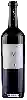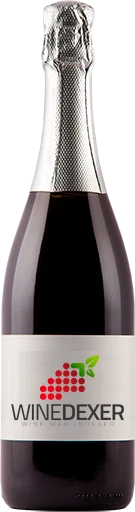
Winery ModavinLambrusco Amabile Bianco
 Sparkling wine



This wine generally goes well with pork, poultry or rich fish (salmon, tuna etc).
Food and wine pairings with Lambrusco Amabile Bianco
Pairings that work perfectly with Lambrusco Amabile Bianco



Original food and wine pairings with Lambrusco Amabile Bianco


The Lambrusco Amabile Bianco of Winery Modavin matches generally quite well with dishes of pork, rich fish (salmon, tuna etc) or mature and hard cheese such as recipes of quiche with mixed vegetables, leek and fresh salmon tart or rolled blue cord.
Details and technical informations about Winery Modavin's Lambrusco Amabile Bianco.
Discover the grape variety: Ugni blanc et rose
Italian origin most certainly, more precisely from Tuscany. It is registered in the Official Catalogue of wine grape varieties list A1. Published genetic analysis has revealed that it is related to the vermentino and for more details click here!
Last vintages of this wine
The best vintages of Lambrusco Amabile Bianco from Winery Modavin are 2016, 2008, 0
Informations about the Winery Modavin
The Winery Modavin is one of of the world's greatest estates. It offers 24 wines for sale in the of Emilia-Romagna to come and discover on site or to buy online.

The wine region of Emilia-Romagna
Romagna/emilia">Emilia-Romagna is a Rich and fertile region in Northern Italy, and one of the country's most prolific wine-producing regions, with over 58,000 hectares (143,320 acres) of vines in 2010. It is 240 kilometers (150 miles) wide and stretches across almost the entire northern Italian peninsula, sandwiched between Tuscany to the South, Lombardy and Veneto to the north and the Adriatic Sea to the east. Nine miles of Liguria is all that separates Emilia-Romagna from the Ligurian Sea, and its uniqueness as the only Italian region with both an east and west coast. Emilia-Romagna's wine-growing heritage dates back to the seventh century BC, making it one of the oldest wine-growing regions in Italy.
The word of the wine: Sulphur
An antiseptic and antioxidant substance known since antiquity, probably already used by the Romans. But it was only in modern times that its use was rediscovered. It will allow a better conservation of the wine and thus favour its export. Sulphur also gave the 18th century winegrower the possibility of extending the maceration period without fearing that the wine would turn sour and thus go from dark rosé wines to the red wines of today. Excessive sulphur, on the other hand, kills happiness, paralysing the aromas and causing headaches.