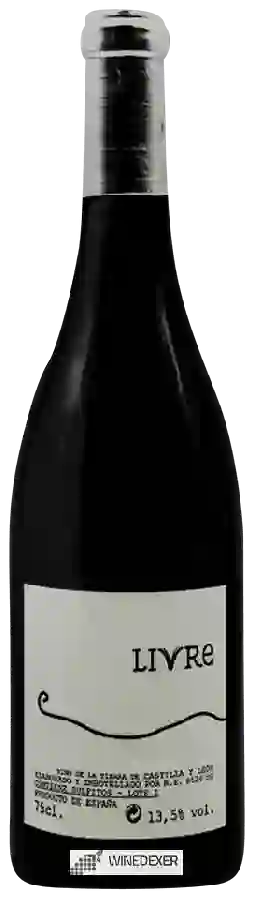
Winery Micro Bio (MicroBio)Livre
 Red wine


In the mouth this red wine is a powerful with a nice balance between acidity and tannins.
This wine generally goes well with poultry, veal or game (deer, venison).

Taste structure of the Livre from the Winery Micro Bio (MicroBio)
Light | Bold | |
Smooth | Tannic | |
Dry | Sweet | |
Soft | Acidic |
In the mouth the Livre of Winery Micro Bio (MicroBio) in the region of Castille-et-Léon is a powerful with a nice balance between acidity and tannins.
Wine flavors and olphactive analysis



On the nose the Livre of Winery Micro Bio (MicroBio) in the region of Castille-et-Léon often reveals types of flavors of earth, microbio.
Food and wine pairings with Livre
Pairings that work perfectly with Livre



Original food and wine pairings with Livre
The Livre of Winery Micro Bio (MicroBio) matches generally quite well with dishes of veal, game (deer, venison) or poultry such as recipes of osso buco with mushrooms, rabbit with leeks or genuine chicken tagine olive and lemon confit tagine with argan oil.
Details and technical informations about Winery Micro Bio (MicroBio)'s Livre.
Discover the grape variety: Mencia
Supple, elegant reds with a ruby robe and fine tannins, featuring aromas of raspberry, cherry, Mediterranean herbs, graphite, black pepper and very pronounced slate mineral notes. Fresh mouth, taut finish. The absolute star of Bierzo DO in Castilla y León and signature of Ribeira Sacra DO and Valdeorras DO in Galicia (heroic vine terraces). Also cultivated in Portugal under the name Jaen. Native Iberian grape from the northwest.
Last vintages of this wine

The best vintages of Livre from Winery Micro Bio (MicroBio) are 2015, 2014, 2017, 2011 and 0.
Informations about the Winery Micro Bio (MicroBio)
The Winery Micro Bio (MicroBio) is one of of the world's great estates. It offers 36 wines for sale in the of Castille-et-Léon to come and discover on site or to buy online.

The wine region of Castille-et-Léon
Cradle of great Castilian reds on high-altitude plateaus (450-1000 m) of the Duero. Tempranillo king (Tinto Fino, Tinta de Toro): powerful, structured reds with notes of black cherry, blackberry, plum, leather and spices, firm tannins and length worthy of long ageing. Stars: Ribera del Duero (Vega Sicilia, Pingus), fleshy Toro, Bierzo (fresh mineral Mencía). Lively herbaceous Verdejo whites from Rueda, cut grass and citrus.
The word of the wine: Glycerol
Alcohol very present in wine (after ethyl alcohol) and which reinforces its unctuousness and fatty sensation.