The Winery McManis of California
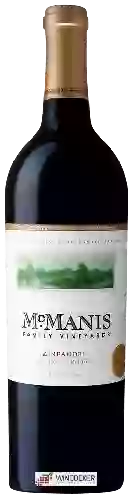
The Winery McManis is one of the best wineries to follow in Californie.. It offers 22 wines for sale in of California to come and discover on site or to buy online.
Looking for the best Winery McManis wines in California among all the wines in the region? Check out our tops of the best red, white or effervescent Winery McManis wines. Also find some food and wine pairings that may be suitable with the wines from this area. Learn more about the region and the Winery McManis wines with technical and enological descriptions.
How Winery McManis wines pair with each other generally quite well with dishes of beef, lamb or poultry such as recipes of oxtail with seed sauce, lamb tagine with vegetables and preserved lemons or spicy crispy chicken.
On the nose the red wine of Winery McManis. often reveals types of flavors of cream, cherry or oaky and sometimes also flavors of smoke, butter or earthy. In the mouth the red wine of Winery McManis. is a powerful with a nice balance between acidity and tannins.
California is the largest and most important wine region in the United States. It represents the southern two-thirds (850 miles or 1,370 kilometers) of the country's west coast. (Oregon and Washington make up the rest. ) The state also spans nearly 10 degrees of latitude.
With its mountains, valleys, plains and plateaus, California's topography is as Complex as its Climate, offering winemakers a bewildering array of terroirs. California wines have only gained worldwide recognition in recent decades (especially after the 1976 Paris ruling). However, the state's wine history goes back more than 200 years. European vines were first planted in the 18th century, when settlers and missionaries moved up and down the West Coast.
How Winery McManis wines pair with each other generally quite well with dishes of pork, rich fish (salmon, tuna etc) or vegetarian such as recipes of truffade (auvergne - cantal - 15), marmite dieppoise or cream and tuna quiche.
On the nose the white wine of Winery McManis. often reveals types of flavors of butterscotch, pineapple or cream and sometimes also flavors of grapefruit, oaky or tropical. In the mouth the white wine of Winery McManis. is a powerful.
White muscat is a white grape variety of Greek origin. Present in several Mediterranean vineyards, it has several synonyms such as muscat de Die, muscat blanc and frontignac. In France, it occupies a little less than 7,000 ha out of a total of 45,000 ha worldwide. Its young shoots are downy. Its youngest leaves are shiny, bronzed and scabrous. The berries and bunches of this variety are all medium-sized. The flesh of the berries is juicy, sweet and firm. Muscat à petits grains has a second ripening period and buds early in the year. It is moderately vigorous and must be pruned short. It likes poor, stony slopes. This variety is often exposed to spring frosts. It fears mildew, wasps, grape worms, court-noué, grey rot and powdery mildew. Muscat à petits grains is used to make rosé wines and dry white wines. Orange, brown sugar, barley sugar and raisins are the known aromas of these wines.
How Winery McManis wines pair with each other generally quite well with dishes of veal, pork or game (deer, venison) such as recipes of veal grenadin with balsamic vinegar and honey, delicious marinated pork chops or my mother's rabbit.
On the nose the pink wine of Winery McManis. often reveals types of flavors of citrus fruit, red fruit.
Juices that flow from the press after the cuvée, at the second pressing. Less fine, often more vegetal, it is mainly used to make the first price champagnes.
Planning a wine route in the of California? Here are the wineries to visit and the winemakers to meet during your trip in search of wines similar to Winery McManis.
Tannat is a red grape variety from Béarn which belongs to the cotoïdes family. Present in several vineyards of France, it occupies nearly 3,000 ha. Its leaves are reddish with tan patches. Its bunches are either of normal size or larger. Its berries have a thin skin and are rounded. Its foliage has a swarthy appearance. This variety must be pruned long because it is vigorous. It likes sandy and gravelly soils. Tannat is often exposed to leafhoppers and mites. It is also somewhat susceptible to grey rot. It has 11 approved clones, including 474, 717 and 794. Once mature, this variety produces acidic, fruity, tannic, acidic and full-bodied wines. Various aromas emerge, notably tobacco, cinnamon and exotic wood. Tannat is rarely used alone. It is combined with iron-servadou to obtain a fruitier taste or with cabernet sauvignon to be more rounded.