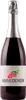
Winery Mastro BinelliPinot Nero
 Red wine



In the mouth this red wine is a with a nice freshness.
This wine generally goes well with poultry, beef or veal.
Taste structure of the Pinot Nero from the Winery Mastro Binelli
Light | Bold | |
Smooth | Tannic | |
Dry | Sweet | |
Soft | Acidic |
In the mouth the Pinot Nero of Winery Mastro Binelli in the region of Emilia-Romagna is a with a nice freshness.
Food and wine pairings with Pinot Nero
Pairings that work perfectly with Pinot Nero



Original food and wine pairings with Pinot Nero

The Pinot Nero of Winery Mastro Binelli matches generally quite well with dishes of beef, veal or game (deer, venison) such as recipes of oxtail and carrot stew, paupiettes à la mérignicaise or pheasant casserole with cabbage.
Details and technical informations about Winery Mastro Binelli's Pinot Nero.
Discover the grape variety: Boskoop glory
It is said to be a natural interspecific cross between a vitis vinifera and a vitis labrusca, the isabelle variety being a better known example. It was discovered by Gérard Van Tol Boskoop and imported into Germany by Günter Pfeiffer. It can also be found in the Netherlands, Belgium and England, where it is commonly grown in greenhouses. We noted that the schuyler looks somewhat like the Boskoop glory even if the origins, each time put forward, are quite different, to be followed!
Last vintages of this wine
The best vintages of Pinot Nero from Winery Mastro Binelli are 2015, 0
Informations about the Winery Mastro Binelli
The Winery Mastro Binelli is one of of the world's great estates. It offers 46 wines for sale in the of Emilia-Romagna to come and discover on site or to buy online.

The wine region of Emilia-Romagna
Romagna/emilia">Emilia-Romagna is a Rich and fertile region in Northern Italy, and one of the country's most prolific wine-producing regions, with over 58,000 hectares (143,320 acres) of vines in 2010. It is 240 kilometers (150 miles) wide and stretches across almost the entire northern Italian peninsula, sandwiched between Tuscany to the South, Lombardy and Veneto to the north and the Adriatic Sea to the east. Nine miles of Liguria is all that separates Emilia-Romagna from the Ligurian Sea, and its uniqueness as the only Italian region with both an east and west coast. Emilia-Romagna's wine-growing heritage dates back to the seventh century BC, making it one of the oldest wine-growing regions in Italy.
The word of the wine: Oxidation
Alteration of the wine caused by prolonged contact with oxygen and resulting in a coppery colour with brown reflections and the appearance of typical aromas reminiscent of rancid nuts.