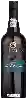
Winery Maria MoraBranco
 White wine



In the mouth this white wine is a powerful.
This wine generally goes well with pork, lean fish or shellfish.
Taste structure of the Branco from the Winery Maria Mora
Light | Bold | |
Dry | Sweet | |
Soft | Acidic |
In the mouth the Branco of Winery Maria Mora in the region of Alentejano is a powerful.
Food and wine pairings with Branco
Pairings that work perfectly with Branco



Original food and wine pairings with Branco

The Branco of Winery Maria Mora matches generally quite well with dishes of pasta, pork or shellfish such as recipes of tagliatelle with seafood and saffron cream, beef bourguignon with cookéo or californian sushi (reverse maki).
Details and technical informations about Winery Maria Mora's Branco.
Discover the grape variety: Millot Léon
Interspecific crossing between the 101-14 Millardet and Grasset (vitis riparia X vitis rupestris) and the goldriesling obtained by Eugène Kühlmann (1858-1932) around 1911 and marketed around 1921. With these same parents, he obtained among others the Maréchal Foch. Léon Millot is still found in Canada, the United States, Switzerland, Germany, Belgium, Denmark, Sweden, the Netherlands, Poland and England. In France, where it was grown for a long time in Alsace, it is no longer grown in the vineyards, although it is listed in the Official Catalogue of Vine Varieties, list A.
Last vintages of this wine
The best vintages of Branco from Winery Maria Mora are 2013, 2016, 2014, 2011 and 2015.
Informations about the Winery Maria Mora
The Winery Maria Mora is one of of the world's greatest estates. It offers 6 wines for sale in the of Alentejano to come and discover on site or to buy online.

The wine region of Alentejano
Tejo">Alentejo is a well-known, highly respected wine region in eastern Portugal. This hot, Dry area covers approximately a third of the country and is best known for its red wine, the best of which are sold under the and Alentejo DOC (Denominacao de Origem Controlada) title. Wine from Alentejo is typically made from Aragonez (Tempranillo), Castelao, Trincadeira or a Rich, ripe, jammy blend of the three. Antao Vaz is the white variety of choice here, producing a good level of Acidity and tropical fruit flavors.
The word of the wine: Aromatic
Character of a wine that is particularly expressive and rich in aromas. Some grape varieties, such as Gewurztraminer or Muscat, produce very aromatic wines.