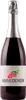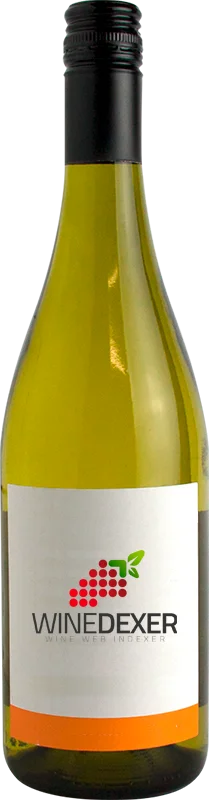
Winery Maria BortolottiFelsina Bianco
 White wine


In the mouth this white wine is a powerful.
This wine generally goes well with lean fish, shellfish or mature and hard cheese.
Taste structure of the Felsina Bianco from the Winery Maria Bortolotti
Light | Bold | |
Dry | Sweet | |
Soft | Acidic |
In the mouth the Felsina Bianco of Winery Maria Bortolotti in the region of Emilia-Romagna is a powerful.
Food and wine pairings with Felsina Bianco
Pairings that work perfectly with Felsina Bianco



Original food and wine pairings with Felsina Bianco


The Felsina Bianco of Winery Maria Bortolotti matches generally quite well with dishes of pasta, shellfish or mature and hard cheese such as recipes of pasta cake, fried rice with shrimp and chicken or pork in a salty-sweet way.
Details and technical informations about Winery Maria Bortolotti's Felsina Bianco.
Discover the grape variety: Centennial seedless
Cross between gold and Q25-6 (F2 emperor x Pirovano 75 or sultana moscata) obtained in the United States in 1966 by Professor Harold P. Olmo of the University of Davis (California). At the end of 2005, Centennial seedless was registered in the Official Catalogue of table grape varieties, list A1.
Last vintages of this wine
The best vintages of Felsina Bianco from Winery Maria Bortolotti are 0
Informations about the Winery Maria Bortolotti
The Winery Maria Bortolotti is one of of the world's great estates. It offers 23 wines for sale in the of Emilia-Romagna to come and discover on site or to buy online.

The wine region of Emilia-Romagna
Romagna/emilia">Emilia-Romagna is a Rich and fertile region in Northern Italy, and one of the country's most prolific wine-producing regions, with over 58,000 hectares (143,320 acres) of vines in 2010. It is 240 kilometers (150 miles) wide and stretches across almost the entire northern Italian peninsula, sandwiched between Tuscany to the South, Lombardy and Veneto to the north and the Adriatic Sea to the east. Nine miles of Liguria is all that separates Emilia-Romagna from the Ligurian Sea, and its uniqueness as the only Italian region with both an east and west coast. Emilia-Romagna's wine-growing heritage dates back to the seventh century BC, making it one of the oldest wine-growing regions in Italy.
The word of the wine: Decommissioning
Removal of the right to the appellation of origin of a wine; it is then marketed as Vin de France.