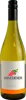
Winery Marc MajoralDoux Naturel
 Natural sweet wine
This wine generally goes well with
Details and technical informations about Winery Marc Majoral's Doux Naturel.
Discover the grape variety: Schoenburger
This variety is the result of an intraspecific cross between Pinot Noir and Pirovano 1 (Chasselas rose x Hamburg Muscat), obtained in 1939 by Heinrich Birk at the Geinsenheim Research Station (Germany). It can be found not only in Germany but also in Great Britain, Belgium, Italy, the Czech Republic, Brazil, South Africa, Australia, the United States, Canada, etc. In France, it is almost unknown.
Informations about the Winery Marc Majoral
The Winery Marc Majoral is one of of the world's greatest estates. It offers 8 wines for sale in the of Maury to come and discover on site or to buy online.

The wine region of Maury
Maury is a town in the northern Roussillon region of southern France. Its name is best known as an appellation for the natural Sweet wines produced around the town, although in 2011 the separate AOC Maury Sec came into effect for Dry red wines, due to the recognition that a local wine industry based entirely on fortified wine was too narrowly focused. The natural sweet wines of Maury are mainly produced from the Grenache grapes (Grenache Noir, Grenache Blanc and Grenache Gris). They are produced in a style very similar to the sweet wines of Banyuls, 35 miles (57km) to the southeast, which also use Grenache.
The wine region of Languedoc-Roussillon
Languedoc (formerly Coteaux du Languedoc) is a key appellation used in the Languedoc-Roussillon wine region of southern France. It covers Dry table wines of all three colors (red, white and rosé) from the entire region, but leaves Sweet and Sparkling wines to other more specialized appellations. About 75% of all Languedoc wines are red, with the remaining 25% split roughly down the middle between whites and rosés. The appellation covers most of the Languedoc region and almost a third of all the vineyards in France.
The word of the wine: Disgorging (champagne)
This is the evacuation of the deposit formed by the yeasts during the second fermentation in the bottle, by opening the bottle. The missing volume is completed with the liqueur de dosage - a mixture of wine and cane sugar - before the final cork is placed. For some years now, some producers have been replacing this sugar with rectified concentrated musts (concentrated grape juice) which give excellent results. A too recent dosage (less than three months) harms the gustatory harmony of the champagne.