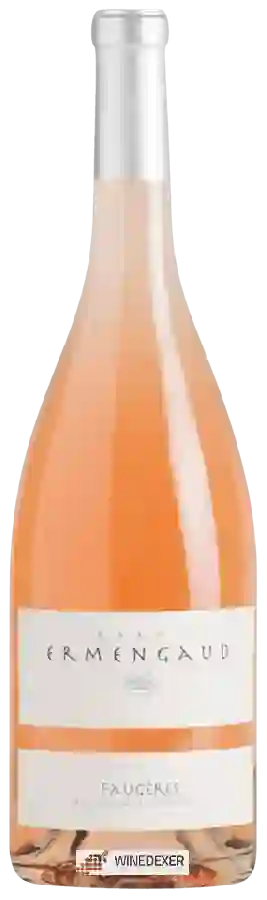
Winery Les Crus FaugeresBaron Ermengaud Rosé
 Pink wine
This wine generally goes well with vegetarian, appetizers and snacks or lean fish.
Food and wine pairings with Baron Ermengaud Rosé
Pairings that work perfectly with Baron Ermengaud Rosé



Original food and wine pairings with Baron Ermengaud Rosé


The Baron Ermengaud Rosé of Winery Les Crus Faugeres matches generally quite well with dishes of pasta, vegetarian or appetizers and snacks such as recipes of fideuà (paella with pasta and fish), magic cake cheese quiche or baguette filled with saint moret and ham.
Details and technical informations about Winery Les Crus Faugeres's Baron Ermengaud Rosé.
Discover the grape variety: Goruli mtsvane
An endemic Georgian grape variety, known since ancient times, it is most regularly found today in the Kartli and Imereti regions. It is practically unknown in other wine-producing countries. It should not be confused with, among others, Mtsvane Kakhuri and Gorula Mtsvane (table grapes), which are also white and native to Georgia.
Informations about the Winery Les Crus Faugeres
The Winery Les Crus Faugeres is one of of the world's great estates. It offers 60 wines for sale in the of Faugères to come and discover on site or to buy online.

The wine region of Faugères
Faugeres is an appellation in the Languedoc-Roussillon region of southern France. Although it also covers white and rosé wines, the appellation is best known for its Rich, ripe red wines made from the classic Rhone varieties of Syrah, Grenache and Mourvèdre, as well as the more MediterraneanCinsaut and Lladoner Pelut. The appellation covers the southern slopes of a series of hills only a few kilometres from the Mediterranean coast. The town of Faugeres forms the centre of the area, which extends 10 km from east to west.
The wine region of Languedoc-Roussillon
Languedoc (formerly Coteaux du Languedoc) is a key appellation used in the Languedoc-Roussillon wine region of southern France. It covers Dry table wines of all three colors (red, white and rosé) from the entire region, but leaves Sweet and Sparkling wines to other more specialized appellations. About 75% of all Languedoc wines are red, with the remaining 25% split roughly down the middle between whites and rosés. The appellation covers most of the Languedoc region and almost a third of all the vineyards in France.
The word of the wine: Naturé
See savagnin.