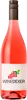
La Cave de Saint TropezBlue Golfe Côtes de Provence Rosé
 Pink wine


In the mouth this pink wine is a with a nice freshness.
This wine generally goes well with pork, vegetarian or poultry.
Taste structure of the Blue Golfe Côtes de Provence Rosé from the La Cave de Saint Tropez
Light | Bold | |
Dry | Sweet | |
Soft | Acidic |
In the mouth the Blue Golfe Côtes de Provence Rosé of La Cave de Saint Tropez in the region of Provence is a with a nice freshness.
Food and wine pairings with Blue Golfe Côtes de Provence Rosé
Pairings that work perfectly with Blue Golfe Côtes de Provence Rosé



Original food and wine pairings with Blue Golfe Côtes de Provence Rosé

The Blue Golfe Côtes de Provence Rosé of La Cave de Saint Tropez matches generally quite well with dishes of pork, shellfish or vegetarian such as recipes of suckling pig leg in the oven, seafood and mushroom quiche or spinach and goat cheese quiche.
Details and technical informations about La Cave de Saint Tropez's Blue Golfe Côtes de Provence Rosé.
Discover the grape variety: Italia Rubi
Pink selection made in Brazil, following a natural coloured mutation of the italia, discovered in 1981 by San Giorgio Jonico. Since 24.08.2009, it is registered in the Official Catalogue of table grape varieties, list A1. In Italy, a more colourful mutation of the Rubi was discovered, called benitaka, which is more uniform in berry colour and ripens about a week earlier. The black brasil variety, which can be found in Brazil, is said to be a natural mutation of benitaka. Finally, Rubi should not be confused with ruby seedless, also a pink apyrene grape.
Last vintages of this wine

The best vintages of Blue Golfe Côtes de Provence Rosé from La Cave de Saint Tropez are 2018
Informations about the La Cave de Saint Tropez
The La Cave de Saint Tropez is one of of the world's great estates. It offers 24 wines for sale in the of Côtes de Provence to come and discover on site or to buy online.

The wine region of Côtes de Provence
The AOC Côtes de Provence is the largest appellation in the Provence wine region of southeastern France. It covers about 20,000 hectares of vineyards, which produce the vast majority of Provence's rosé wine. This appellation includes most of the vineyards in the Var department - essentially the eastern half of the Provence wine region - with the exception of 2,250 hectares North of Toulon which are reserved for the Côteaux Varois en Provence appellation. Although it also covers red and white wine, about 80% of Côtes de Provence production is rosé.
The wine region of Provence
Provence is a wine region in the far southeast of France, best known for the quality (and quantity) of its rosé wines and for its Warm, mild Climate. The modernization that is taking place in many of the traditional wine regions of southern France has not yet taken place to the same extent in Provence, but there are Clear signs of change. The region's Grape varieties, in particular, have come under scrutiny in recent decades. Traditional varieties such as Carignan, Barbaroux (Barbarossa from Sardinia) and Calitor are being replaced by more commercially viable varieties such as Grenache, Syrah and even Cabernet Sauvignon.
The word of the wine: Draft liquor (champagne)
After blending, the wine is bottled with a liqueur de tirage (a mixture of sugar and wine) and a yeast (selected yeasts). The yeast attacks the sugar and creates carbon dioxide. The fermentation, which lasts about two months, is prolonged by an ageing period (15 months minimum in total). The bottle is capped (some rare vintages are capped with a staple and a cork).