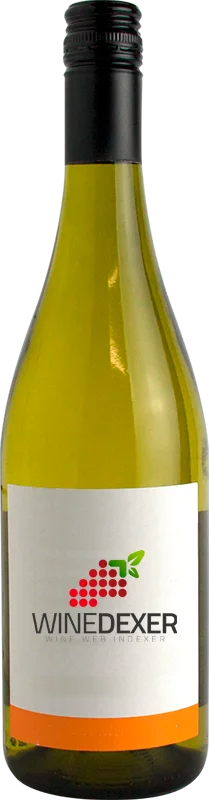
Winery L.SimonVörösmarty Cuvée
 White wine
This wine generally goes well with pork, vegetarian or poultry.
Food and wine pairings with Vörösmarty Cuvée
Pairings that work perfectly with Vörösmarty Cuvée



Original food and wine pairings with Vörösmarty Cuvée



The Vörösmarty Cuvée of Winery L.Simon matches generally quite well with dishes of pork, rich fish (salmon, tuna etc) or spicy food such as recipes of pigeon with bacon and mushrooms, skate wing with caper butter or chicken with rice and curry cream.
Details and technical informations about Winery L.Simon's Vörösmarty Cuvée.
Discover the grape variety: Riesling
White Riesling is a grape variety that originated in France (Alsace). It produces a variety of grape specially used for the elaboration of wine. It is rare to find this grape to eat on our tables. This variety of grape is characterized by small bunches, and small grapes. White Riesling can be found in many vineyards: Alsace, Loire Valley, Languedoc & Roussillon, Lorraine, Provence & Corsica, Rhone Valley, Savoie & Bugey, Beaujolais, South West.
Informations about the Winery L.Simon
The Winery L.Simon is one of of the world's greatest estates. It offers 7 wines for sale in the of Balaton to come and discover on site or to buy online.

The wine region of Balaton
Balatonboglar (South Balaton) is one of several wine regions on the shores of Lake Balaton, in the Transdanubia region of western Hungary. Lake Balaton is a Long, thin freshwater lake measuring almost 80 kilometers (50 miles) in Length, sometimes referred to as the 'Hungarian Sea. ' It is the largest lake in Central Europe and Hungary's most popular tourist destination. A wide portfolio of the popular, internationally recognized Grape varieties are grown here, including a number of the French classics.
The word of the wine: Maceration
Prolonged contact and exchange between the juice and the grape solids, especially the skin. Not to be confused with the time of fermentation, which follows maceration. The juice becomes loaded with colouring matter and tannins, and acquires aromas. For a rosé, the maceration is short so that the colour does not "rise" too much. For white wines too, a "pellicular maceration" can be practised, which allows the wine to acquire more fat.