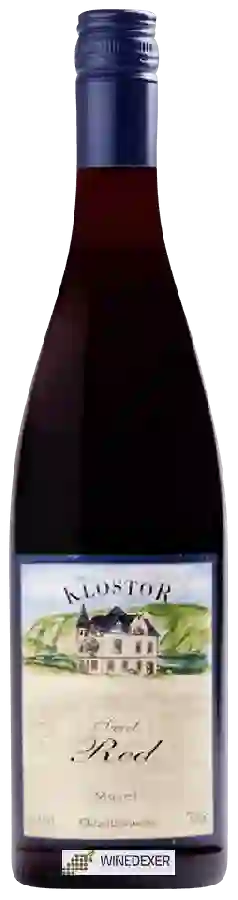
Winery KlostorSweet Red
 Sweet wine


This wine generally goes well with pork, poultry or veal.

Food and wine pairings with Sweet Red
Pairings that work perfectly with Sweet Red



Original food and wine pairings with Sweet Red

The Sweet Red of Winery Klostor matches generally quite well with dishes of pasta, veal or pork such as recipes of lasagne with two salmons, tournedos rossini with port sauce or paupiettes with tomato sauce.
Details and technical informations about Winery Klostor's Sweet Red.
Discover the grape variety: Dornfelder
Intensely coloured, fruity reds with a dense purple robe, soft tannins and a generous palate, with aromas of black cherry, blackberry, plum and floral notes. Made as light easy-drinking reds, popular semi-dry cuvées and more structured barrel-aged versions. The second most planted red variety in Germany (Palatinate, Rheinhessen, Württemberg). Cross of helfensteiner × heroldrebe created in 1955 in Weinsberg by August Herold.
Last vintages of this wine
The best vintages of Sweet Red from Winery Klostor are 0
Informations about the Winery Klostor
The Winery Klostor is one of of the world's greatest estates. It offers 26 wines for sale in the of Mosel to come and discover on site or to buy online.

The wine region of Mosel
Kingdom of lively, crystalline Riesling: citrus, green apple, gunflint, tangy tension and signature slate minerality. From light, fruity Kabinett to off-dry Spätlese, up to sweet Auslese and Trockenbeerenauslese of rare finesse. Some supple Müller-Thurgau and lively Elbling. Steeply sloped vineyards (up to 65% at the Bremmer Calmont) on blue and grey slate, 5,400 ha of Riesling (61.
The word of the wine: Dry extract
Non-liquid constituents of wine.




