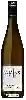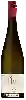
Winery Josef AmbsSpätburgunder
 Red wine
In the mouth this red wine is a with a nice freshness.
This wine generally goes well with poultry, beef or veal.
Taste structure of the Spätburgunder from the Winery Josef Ambs
Light | Bold | |
Smooth | Tannic | |
Dry | Sweet | |
Soft | Acidic |
In the mouth the Spätburgunder of Winery Josef Ambs in the region of Baden is a with a nice freshness.
Food and wine pairings with Spätburgunder
Pairings that work perfectly with Spätburgunder



Original food and wine pairings with Spätburgunder

The Spätburgunder of Winery Josef Ambs matches generally quite well with dishes of beef, veal or game (deer, venison) such as recipes of monkfish tagine, moroccan veal tagine from hanane or baked duck legs with potatoes.
Details and technical informations about Winery Josef Ambs's Spätburgunder.
Discover the grape variety: Mourvaison
Mourvaison noir is a grape variety that originated in France (Provence). It produces a variety of grape specially used for wine making. It is rare to find this grape to eat on our tables. This variety of grape is characterized by medium-sized bunches and medium-sized grapes. Mourvaison noir can be found in several vineyards: South-West, Cognac, Bordeaux, Provence & Corsica, Rhone valley, Loire valley, Savoie & Bugey, Beaujolais.
Informations about the Winery Josef Ambs
The Winery Josef Ambs is one of of the world's great estates. It offers 29 wines for sale in the of Baden to come and discover on site or to buy online.

The wine region of Baden
Baden is the southernmost of Germany's 13 official wine regions. It is also the warmest. Its relatively sunny, DryClimate permits the production of good-quality Spätburgunder (Pinot Noir) and ripe, relatively Full-bodied">Full-bodied examples of Grauburgunder (Pinot Gris) and Weissburgunder (Pinot Blanc). These are often made in oaked styles.
The word of the wine: Bâtonnage
A very old technique that has come back into fashion in modern oenology, which consists of shaking the white wine in the barrels at the end of fermentation, or after fermentation, with a stick or a flail, in order to suspend the fine lees composed of yeasts at the end of their activity. This process is sometimes used for red wines.