The Winery Jolimont of Serra Gaúcha of Rio Grande do Sul
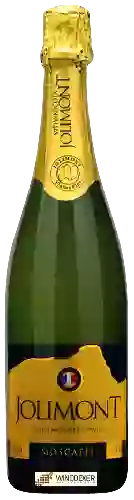
The Winery Jolimont is one of the world's great estates. It offers 60 wines for sale in of Serra Gaúcha to come and discover on site or to buy online.
Looking for the best Winery Jolimont wines in Serra Gaúcha among all the wines in the region? Check out our tops of the best red, white or effervescent Winery Jolimont wines. Also find some food and wine pairings that may be suitable with the wines from this area. Learn more about the region and the Winery Jolimont wines with technical and enological descriptions.
How Winery Jolimont wines pair with each other generally quite well with dishes of pork, rich fish (salmon, tuna etc) or shellfish such as recipes of macaroonade from sète, red mullet, mackerel, tuna, salmon sushi or scallops or scallops express with cognac.
On the nose the sparkling wine of Winery Jolimont. often reveals types of flavors of peach, tree fruit or red fruit and sometimes also flavors of floral. In the mouth the sparkling wine of Winery Jolimont. is a with a nice vivacity and a fine and pleasant bubble.
Serra Gaúcha is a Brazilian wine region in the Southern state of Rio Grande do Sul, where Brazil meets Uruguay. Its name is apt: the landscape here is characterized by low mountain ranges (serras) and populated by gaúchos, the cowboys of the Brazilian Pampas.
Small landholdings of just a few hectares are the norm in Serra Gacúha, which makes co-operative winemaking almost a necessity. The cost of buying and maintaining winemaking equipment is considerable, so local vignerons pool their resources and invest in shared, co-operative wineries.
It was through similar collaborative efforts that a group of Serra Gaúcha winemakers successfully campaigned for the creation of Vale do Vinhedos DO, Brazil's first wine appellation. With the infamous Bento Goncalves at the heart, Serra Gaúcha is considered the wine capital region of Brazil and is responsible for 80 percent of the entire country's production of wine.
Serra Gaúcha's Terroir is characterized by the region's altitude and latitude, while the local culture is tangibly influenced by the immigrant populations from Germany and Italy. Porto Alegre is the state capital and is, as its name impLies, a harbor town.
It lies at the eastern edge of the Serra Gaúcha winelands, and from there the land rises from sea level to more than 2,500 feet (760m) at Caixas do Sul, the state's second city and local wine capital. The altitude and mountainous topography here are vital to the area's suitability for viticulture, providing cooling temperatures to create a longer growing season and higher acid retention. Soil type of the region is also attributed to the altitude with viticulture predominantly found planted in pockets of volcanic basalt that is high in nutrients.
The local cuisine and architecture show significant Italian influences, and Italy is largely to thank for the birth of effective viticulture here in the late 19th Century.
How Winery Jolimont wines pair with each other generally quite well with dishes of beef, lamb or poultry such as recipes of wild boar stew in burgundy style, eggplant moussaka with lamb or the chicken with rice of the mother michèle.
In the mouth the red wine of Winery Jolimont. is a powerful with a nice balance between acidity and tannins.
How Winery Jolimont wines pair with each other generally quite well with dishes of beef, pork or game (deer, venison) such as recipes of tunisian molokheya, rougail sausage or potjevlesch (northern france).
Protected geographical indication. Equivalent to vin de pays in European regulations.
How Winery Jolimont wines pair with each other generally quite well with dishes of pork, rich fish (salmon, tuna etc) or vegetarian such as recipes of sloth pork loin, skate wings with black butter sauce or magic cake cheese quiche.
Cabernet Franc is one of the oldest red grape varieties in Bordeaux. The Libourne region is its terroir where it develops best. The terroirs of Saint-Emilion and Fronsac allow it to mature and develop its best range of aromas. It is also the majority in many blends. The very famous Château Cheval Blanc, for example, uses 60% Cabernet Franc. The wines produced with Cabernet Franc are medium in colour with fine tannins and subtle aromas of small red fruits and spices. When blended with Merlot and Cabernet Sauvignon, it brings complexity and a bouquet of aromas to the wine. It produces fruity wines that can be drunk quite quickly, but whose great vintages can be kept for a long time. It is an earlier grape variety than Cabernet Sauvignon, which means that it is planted as far north as the Loire Valley. In Anjou, it is also used to make sweet rosé wines. Cabernet Franc is now used in some twenty countries in Europe and throughout the world.
How Winery Jolimont wines pair with each other generally quite well with dishes of beef such as recipes of adapted vietnamese fondue.
See len de l'el.
Planning a wine route in the of Serra Gaúcha? Here are the wineries to visit and the winemakers to meet during your trip in search of wines similar to Winery Jolimont.
Tannat is a red grape variety from Béarn which belongs to the cotoïdes family. Present in several vineyards of France, it occupies nearly 3,000 ha. Its leaves are reddish with tan patches. Its bunches are either of normal size or larger. Its berries have a thin skin and are rounded. Its foliage has a swarthy appearance. This variety must be pruned long because it is vigorous. It likes sandy and gravelly soils. Tannat is often exposed to leafhoppers and mites. It is also somewhat susceptible to grey rot. It has 11 approved clones, including 474, 717 and 794. Once mature, this variety produces acidic, fruity, tannic, acidic and full-bodied wines. Various aromas emerge, notably tobacco, cinnamon and exotic wood. Tannat is rarely used alone. It is combined with iron-servadou to obtain a fruitier taste or with cabernet sauvignon to be more rounded.