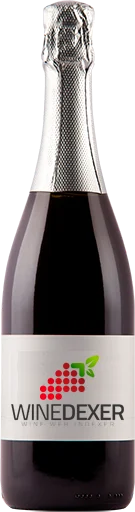
Winery Jean GinglingerLa Creme du Petillant d'Alsace
 Sparkling wine
This wine generally goes well with poultry, appetizers and snacks or lean fish.
Food and wine pairings with La Creme du Petillant d'Alsace
Pairings that work perfectly with La Creme du Petillant d'Alsace



Original food and wine pairings with La Creme du Petillant d'Alsace


The La Creme du Petillant d'Alsace of Winery Jean Ginglinger matches generally quite well with dishes of shellfish, poultry or appetizers and snacks such as recipes of chinese fondue, chicken with green olives or codfish accras.
Details and technical informations about Winery Jean Ginglinger's La Creme du Petillant d'Alsace.
Discover the grape variety: Nerello mascalese
A very old grape variety grown in Italy, more precisely in the north of Sicily on the slopes of Mount Etna and in Sardinia. Its origin would be Greek because it was reported in Greece in the 7th century B.C. It is the result of a natural intraspecific crossing between sangiovese or nielluccio and mantonico bianco. It should not be confused with nerello capuccio and pignatello nero. It should be noted that Nerello mascalese seems to be a grape variety adapted to altitude, as is the case in Sicily where it is planted at a rate of 6,000 and 9,000 vines per hectare. It is practically unknown in other wine-producing countries, which is certainly due to its late ripening.
Informations about the Winery Jean Ginglinger
The Winery Jean Ginglinger is one of of the world's great estates. It offers 38 wines for sale in the of Crémant d'Alsace to come and discover on site or to buy online.

The wine region of Crémant d'Alsace
Crémant d'Alsace is the appellation for white and rosé Sparkling wines from the Alsace wine region in northeastern France. Introduced in August 1976, the appellation now accounts for about a quarter of the region's production, or about 45 million bottles per year, up from 31 million in 2009. Outside of Champagne (240km to the west), it is the dominant French sparkling wine appellation, with more than half of all crémant production. The cooperatives are the most important players, with Wolfberger alone producing 6 to 7 million bottles.
The wine region of Alsace
Alsace, located in the extreme north-east of France, is Distinguished from other French wine regions by its strong Franco-Germanic influences. These influences are the result of a back-and-forth between the German and French sovereignties over the last few centuries. They can be seen not only in the architecture and culture of Alsace, but also in the wines. Alsace wines are produced under three main appellations: Alsace and Alsace Grand Cru for still white wines (Sweet and Dry), and Crémant d'Alsace for Sparkling wines.
The word of the wine: Millerandage
Poor fertilization of some grapes at the time of flowering in cold or rainy weather. Milled grapes do not grow and usually do not contain seeds.