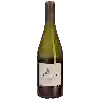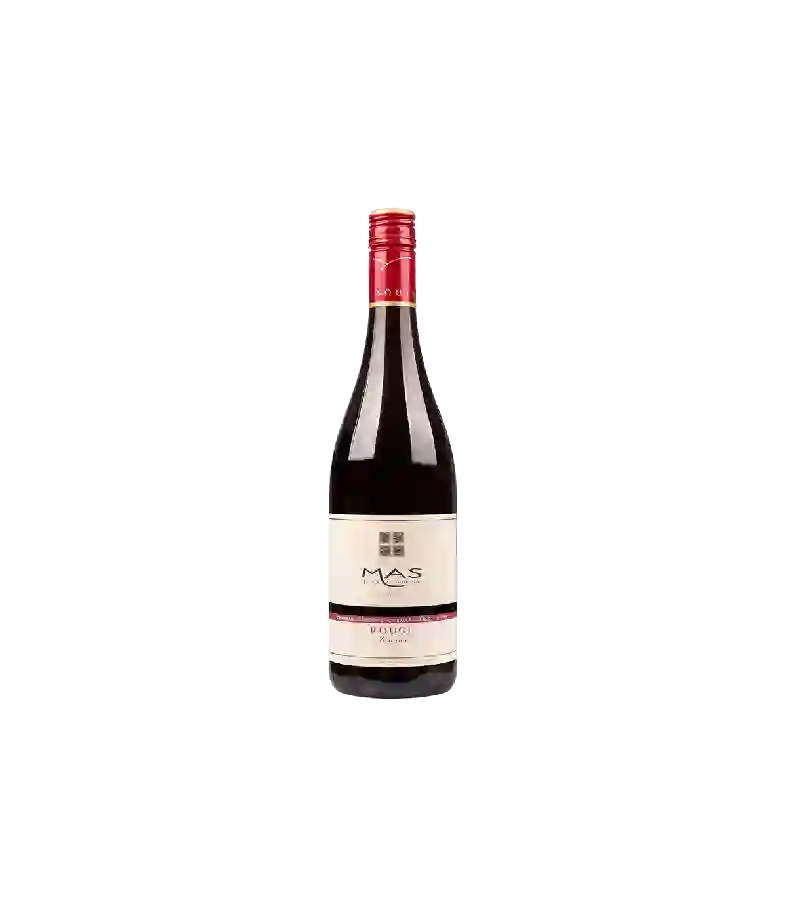
Winery Jean Claude MasRural Par Passion Blanc
 White wine
In the mouth this white wine is a .
This wine generally goes well with vegetarian, poultry or lean fish.
Taste structure of the Rural Par Passion Blanc from the Winery Jean Claude Mas
Light | Bold | |
Dry | Sweet | |
Soft | Acidic |
In the mouth the Rural Par Passion Blanc of Winery Jean Claude Mas in the region of Languedoc-Roussillon is a .
Food and wine pairings with Rural Par Passion Blanc
Pairings that work perfectly with Rural Par Passion Blanc



Original food and wine pairings with Rural Par Passion Blanc


The Rural Par Passion Blanc of Winery Jean Claude Mas matches generally quite well with dishes of pasta, vegetarian or poultry such as recipes of pad thai, quiche with leeks and fresh salmon from flo or ham croquette with purée.
Details and technical informations about Winery Jean Claude Mas's Rural Par Passion Blanc.
Discover the grape variety: Cayuga
Complex interspecific cross between white seyval (5-276 Seyve-Villard) and schuyler obtained in 1945 by Robinson Willard B. and Einset John at Cornell University in Geneva (USA). It can also be found in Canada, almost unknown in France.
Informations about the Winery Jean Claude Mas
The Winery Jean Claude Mas is one of of the world's great estates. It offers 148 wines for sale in the of Languedoc to come and discover on site or to buy online.

The wine region of Languedoc
Languedoc (formerly Coteaux du Languedoc) is a key appellation used in the Languedoc-Roussillon wine region of southern France. It covers Dry table wines of all three colors (red, white and rosé) from the entire region, but leaves Sweet and Sparkling wines to other more specialized appellations. About 75% of all Languedoc wines are red, with the remaining 25% split roughly down the middle between whites and rosés. The appellation covers most of the Languedoc region and almost a third of all the vineyards in France.
The wine region of Languedoc-Roussillon
Languedoc (formerly Coteaux du Languedoc) is a key appellation used in the Languedoc-Roussillon wine region of southern France. It covers Dry table wines of all three colors (red, white and rosé) from the entire region, but leaves Sweet and Sparkling wines to other more specialized appellations. About 75% of all Languedoc wines are red, with the remaining 25% split roughly down the middle between whites and rosés. The appellation covers most of the Languedoc region and almost a third of all the vineyards in France.
The word of the wine: Côte des Bar
This is the name given to the vineyards of the Aube, which are closer to Burgundy, and some of the wines produced here bear witness to this proximity. The pinot noir dominates, the meunier is practically absent. Two crus have become references: Riceys, where a rosé without bubbles is also produced, and Montgueux near Troyes, renowned for its Chardonnay.