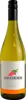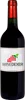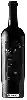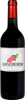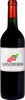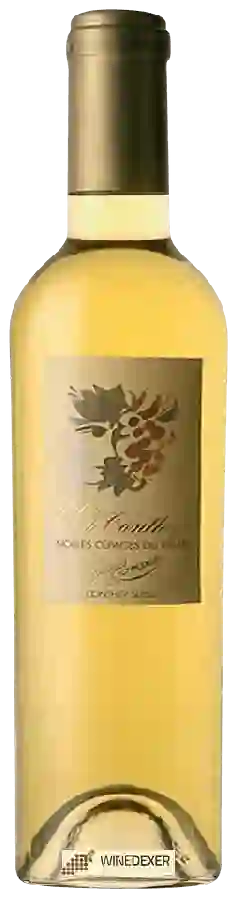
Winery Jacques GermanierL'Or de Conthey
 White wine


This wine generally goes well with vegetarian, poultry or rich fish (salmon, tuna etc).

Wine flavors and olphactive analysis


On the nose the L'Or de Conthey of Winery Jacques Germanier in the region of Valais often reveals types of flavors of earth, oak.
Food and wine pairings with L'Or de Conthey
Pairings that work perfectly with L'Or de Conthey



Original food and wine pairings with L'Or de Conthey


The L'Or de Conthey of Winery Jacques Germanier matches generally quite well with dishes of rich fish (salmon, tuna etc), shellfish or sweet desserts such as recipes of pasta with tuna and tomato sauce, mussels with camembert cheese or apple pie.
Details and technical informations about Winery Jacques Germanier's L'Or de Conthey.
Discover the grape variety: Terrano
Nervy, mineral reds with an intense violet-ruby robe, firm tannins and cutting acidity, showing aromas of red fruits (tart cherry, redcurrant), blackberry, wild herbs, iron and characteristic mineral notes of karst soils. Refreshing palate, saline finish. Star of Carso DOC (Friuli, Italy) and Kras (Slovenia) on the ferruginous red soils of the Adriatic plateau. Autochthonous Friulian-Slovenian variety, related to refosco.
Last vintages of this wine

The best vintages of L'Or de Conthey from Winery Jacques Germanier are 2012, 2015, 2013, 2011 and 0.
Informations about the Winery Jacques Germanier
The Winery Jacques Germanier is one of of the world's greatest estates. It offers 75 wines for sale in the of Valais to come and discover on site or to buy online.

The wine region of Valais
Switzerland's largest vineyard, capital of native grapes. Straight, precise alpine whites: light, floral Chasselas (Fendant), signature Petite Arvine with saline, grapefruit and rhubarb notes, rich, apricoty Amigne, mineral Humagne Blanche. Altitude reds: fine Pinot Noir, crisp Gamay, native Cornalin and Humagne Rouge, spicy and deep. Highly precise alpine age-worthy wines.
The word of the wine: Size (champagne)
Juices that flow from the press after the cuvée, at the second pressing. Less fine, often more vegetal, it is mainly used to make the first price champagnes.