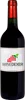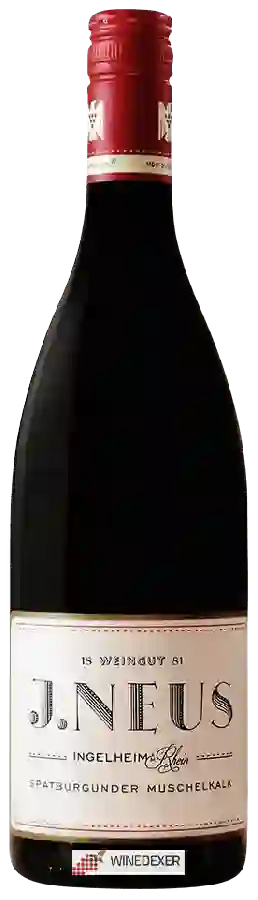
Winery J NeusSpätburgunder Muschelkalk
 Red wine



In the mouth this red wine is a with a nice freshness.
This wine generally goes well with poultry, beef or veal.

Taste structure of the Spätburgunder Muschelkalk from the Winery J Neus
Light | Bold | |
Smooth | Tannic | |
Dry | Sweet | |
Soft | Acidic |
In the mouth the Spätburgunder Muschelkalk of Winery J Neus in the region of Rheinhessen is a with a nice freshness.
Wine flavors and olphactive analysis


On the nose the Spätburgunder Muschelkalk of Winery J Neus in the region of Rheinhessen often reveals types of flavors of non oak, earth or oak and sometimes also flavors of red fruit, black fruit.
Food and wine pairings with Spätburgunder Muschelkalk
Pairings that work perfectly with Spätburgunder Muschelkalk



Original food and wine pairings with Spätburgunder Muschelkalk

The Spätburgunder Muschelkalk of Winery J Neus matches generally quite well with dishes of beef, veal or game (deer, venison) such as recipes of fricandeaux german style, milanese cutlets like in italy or duck breast with apples.
Details and technical informations about Winery J Neus's Spätburgunder Muschelkalk.
Discover the grape variety: Perdin
Simple, fresh dry whites with a pale golden colour, supple palate with moderate acidity, showing undemonstrative aromas of citrus and white flowers. Discreet rustic profile. Almost extinct, preserved in INRAE varietal collections for its heritage value, a witness to the pre-phylloxera ampelographic diversity of the South-West and part of the heritage varieties under study. Rare French white variety, formerly grown in the South-West.
Last vintages of this wine
The best vintages of Spätburgunder Muschelkalk from Winery J Neus are 2017, 2015, 0, 2016 and 2018.
Informations about the Winery J Neus
The Winery J Neus is one of of the world's greatest estates. It offers 28 wines for sale in the of Rheinhessen to come and discover on site or to buy online.

The wine region of Rheinhessen
71% white region: Riesling is king (5,000 ha), dry to off-dry, ripe yellow fruit, apple, citrus and fine saline minerality. Supple, floral Müller-Thurgau for everyday, the world's largest Silvaner plantation with herbaceous, straight notes. Historic cradle of off-sweet Liebfraumilch. Some supple reds (Dornfelder, Spätburgunder).
The word of the wine: Tastevin
Metal cup, wide and of low height, being used to mirror and taste the wine. Still used in wine brotherhoods for its emblematic and folkloric character, the tastevin has been replaced by the various tasting glasses.