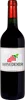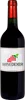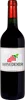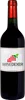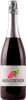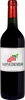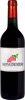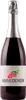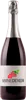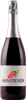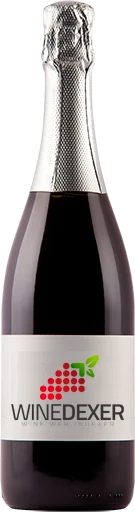
Winery Il PoggiarelloGutturnio Frizzante
 Sparkling wine



This wine generally goes well with pork, poultry or mild and soft cheese.
Food and wine pairings with Gutturnio Frizzante
Pairings that work perfectly with Gutturnio Frizzante



Original food and wine pairings with Gutturnio Frizzante

The Gutturnio Frizzante of Winery Il Poggiarello matches generally quite well with dishes of pork, spicy food or poultry such as recipes of chicken blanquette, chicken risotto with curry or seafood, chorizo and chicken paella from patou.
Details and technical informations about Winery Il Poggiarello's Gutturnio Frizzante.
Discover the grape variety: Dabouki
It is most certainly Syrian. By crossing it with the Chasselas, we obtained the Danlas variety, which, by its foliage, somewhat resembles that of its mother the Dabouki. It can be found in Israel, Jordan, Palestine, Syria, Lebanon, Algeria, Tunisia, Morocco, etc. In France it is practically endangered, but it is still listed in the Official Catalogue of Table Grape Varieties, list A1.
Last vintages of this wine
The best vintages of Gutturnio Frizzante from Winery Il Poggiarello are 2019, 2018, 2017, 2015 and 2014.
Informations about the Winery Il Poggiarello
The Winery Il Poggiarello is one of of the world's greatest estates. It offers 24 wines for sale in the of Emilia-Romagna to come and discover on site or to buy online.

The wine region of Emilia-Romagna
Romagna/emilia">Emilia-Romagna is a Rich and fertile region in Northern Italy, and one of the country's most prolific wine-producing regions, with over 58,000 hectares (143,320 acres) of vines in 2010. It is 240 kilometers (150 miles) wide and stretches across almost the entire northern Italian peninsula, sandwiched between Tuscany to the South, Lombardy and Veneto to the north and the Adriatic Sea to the east. Nine miles of Liguria is all that separates Emilia-Romagna from the Ligurian Sea, and its uniqueness as the only Italian region with both an east and west coast. Emilia-Romagna's wine-growing heritage dates back to the seventh century BC, making it one of the oldest wine-growing regions in Italy.
The word of the wine: Broker
In the past, he was a sort of fraud control agent who had to watch over the quality of merchant wines (he could carry a sword!). His function has evolved towards expertise (it was the brokers who established the famous 1855 classification in Bordeaux) and today he puts the producer in contact with the merchant.