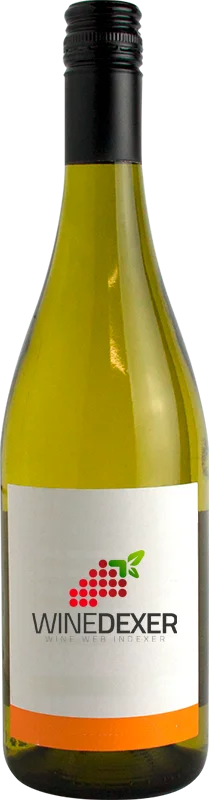
Winery HorneroSauvignon Blanc
 White wine
This wine generally goes well with vegetarian, rich fish (salmon, tuna etc) or shellfish.
Food and wine pairings with Sauvignon Blanc
Pairings that work perfectly with Sauvignon Blanc



Original food and wine pairings with Sauvignon Blanc
The Sauvignon Blanc of Winery Hornero matches generally quite well with dishes of rich fish (salmon, tuna etc), shellfish or vegetarian such as recipes of gravelax salmon, mi sao or mushroom, bacon and gruyere quiche.
Details and technical informations about Winery Hornero's Sauvignon Blanc.
Discover the grape variety: Babic
This is an old indigenous variety that has been cultivated for a long time in Croatia, especially in central and southern Dalmatia. It can also be found in Hungary, in the former Yugoslavia to which Croatia belonged... in France it is almost unknown. It should be noted that it would be related with the dobricic and thus also with the plavac mali its son. Babic should not be confused with babica crni, another Croatian black grape variety.
Informations about the Winery Hornero
The Winery Hornero is one of of the world's greatest estates. It offers 11 wines for sale in the of Canelones to come and discover on site or to buy online.

The wine region of Canelones
The Canelones administrative department, Northeast of the Uruguayan capital of Montevideo, is home to the majority of Uruguay's Vineyards and accounts for aRound 60 percent of all wine produced in the country. It Lies in the South of the small South American country, where the majority of vines are planted, inland from the Atlantic coast and the Rio de la Plata estuary. The region itself covers a broad arc approximately 50km (30 miles) Deep, drawn clockwise from the northwestern outskirts of Montevideo round to the coastline east of the capital city. The eponymous administrative capital of the region lies 50km (31 miles) to the north of Montevideo.
The word of the wine: Bordeaux barrel
Barrels of 220 to 225 litres. The toasting of the barrel to bend the staves (curved boards used to make the barrels) can vary according to the coopers and the demand. A gentle and slow toasting has little effect on the aromas. On the other hand, a strong toasting gives aromas of coffee or cocoa which will influence the taste of the wine. A wine barrel has already been aged for a year and has less impact on the wine than a new barrel.