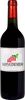
Winery HoltkampRobert Red Reserve
 Red wine
This wine generally goes well with
Details and technical informations about Winery Holtkamp's Robert Red Reserve.
Discover the grape variety: Counoise
Counoise is a black grape variety of Spanish origin. It is widely cultivated in the southern part of France. It is very similar to the aubun, with which it is often confused, and has a white cottony bud. Unlike the aubun, the leaves of this variety do not have teeth in the petiolar sinus. They are thick and large. Its bunches are medium-sized but its berries are large. It is advisable to prune it short so that it is productive. It matures in the second half of the year, but production depends on the vintage. This grape variety appreciates hillside terroirs, which are stony and warm. It fears grey rot without being sensitive to oidium and mildew. Counoise has two approved clones, 508 and 725. The wine obtained from Counoise is not very colourful. It is fine and fruity. Its aromas are diversified with notes of fruit, flowers and spices.
Informations about the Winery Holtkamp
The Winery Holtkamp is one of of the world's greatest estates. It offers 11 wines for sale in the of Indiana to come and discover on site or to buy online.

The wine region of Indiana
Indiana is a state in the American Midwest, located between Michigan to the North and Kentucky to the South. The state covers 36,500 square miles (95,000 km²) of fertile plains and shallow valleys, well suited to fruit and grain production. Vineyards are largely planted to French-American Hybrid varieties, with a growing interest in those less susceptible to the challenges of a hot, humid Climate. Chambourcin, Marechal Foch, Catawba and Vidal Blanc are common here.
The word of the wine: Maceration
Prolonged contact and exchange between the juice and the grape solids, especially the skin. Not to be confused with the time of fermentation, which follows maceration. The juice becomes loaded with colouring matter and tannins, and acquires aromas. For a rosé, the maceration is short so that the colour does not "rise" too much. For white wines too, a "pellicular maceration" can be practised, which allows the wine to acquire more fat.