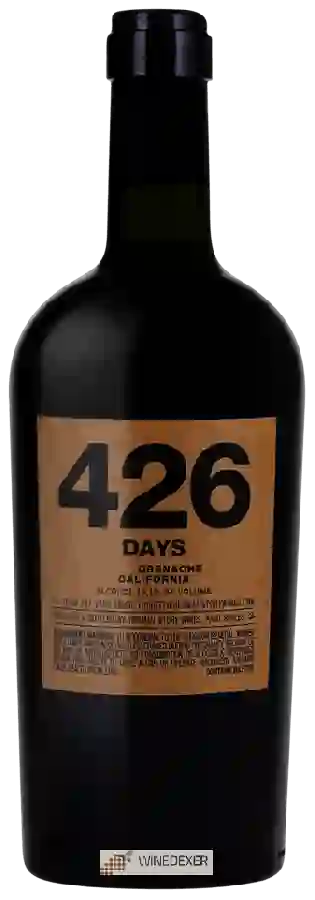
Winery Herman Story426 Days Grenache
 Red wine


This wine generally goes well with beef and mature and hard cheese.

Wine flavors and olphactive analysis


On the nose the 426 Days Grenache of Winery Herman Story in the region of California often reveals types of flavors of non oak, oak or spices and sometimes also flavors of red fruit.
Food and wine pairings with 426 Days Grenache
Pairings that work perfectly with 426 Days Grenache


Original food and wine pairings with 426 Days Grenache
The 426 Days Grenache of Winery Herman Story matches generally quite well with dishes of beef or mature and hard cheese such as recipes of beef lark or filet mignon stuffed with bacon and comté cheese.
Details and technical informations about Winery Herman Story's 426 Days Grenache.
Discover the grape variety: Grenache Gris
Structured and rich whites and rosés with a pale salmon or golden robe, full mouthfeel and moderate acidity, with aromas of yellow fruits (pear, peach), candied citrus, white flowers, fennel, garrigue and schist mineral notes. Good ageing potential. Star of the great identity whites of Roussillon (Côtes du Roussillon AOC, Collioure AOC) on schist soils. A grey-skinned mutation of the Aragonese Grenache Noir.
Last vintages of this wine
The best vintages of 426 Days Grenache from Winery Herman Story are 2014, 0
Informations about the Winery Herman Story
The Winery Herman Story is one of of the world's great estates. It offers 27 wines for sale in the of California to come and discover on site or to buy online.

The wine region of California
Powerful, sunny reds: dense Napa Cabernet Sauvignon (blackcurrant, chocolate, tobacco, ample tannins), spicy, jammy Zinfandel from the Sierra Foothills, silky red-fruited Pinot Noir on the cool coast (Sonoma, Russian River, Central Coast). Opulent, buttery Chardonnay, notes of yellow fruit and vanilla. Varied climate, from the hot interior to the Pacific-cooled coast. 80% of US production, 139 AVAs including Napa (1st AVA, 1981).
The word of the wine: Organic (agriculture)
A type of agriculture (and therefore viticulture) based on respect for living organisms and biological cycles, and which excludes the use of synthetic treatment products and synthetic fertilizers. Organic farming is guaranteed by the respect of a set of specifications.