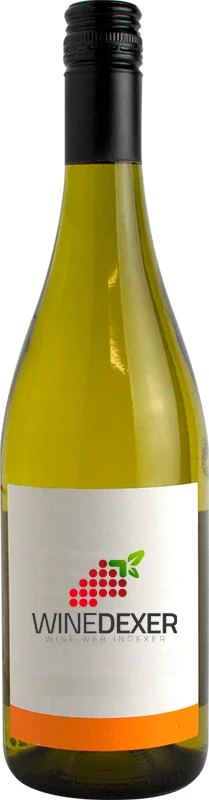
Winery GlamoureSémillon
 White wine
This wine generally goes well with poultry, rich fish (salmon, tuna etc) or shellfish.
Food and wine pairings with Sémillon
Pairings that work perfectly with Sémillon



Original food and wine pairings with Sémillon

The Sémillon of Winery Glamoure matches generally quite well with dishes of rich fish (salmon, tuna etc), shellfish or sweet desserts such as recipes of sea bream in foil on the barbecue, phad thai (thai style fried noodles) or real chocolate cake.
Details and technical informations about Winery Glamoure's Sémillon.
Discover the grape variety: Cabernet-Dorsa
Intraspecific cross between the limberger and the dornfelder made in 1971 by Bernard Hill of the Weinsberg Research Institute in Germany. It can be found in the Netherlands, Germany, Belgium, Switzerland, Poland, the Czech Republic and the United States. Note that Cabernet Dorio has the same parents.
Informations about the Winery Glamoure
The Winery Glamoure is one of of the world's greatest estates. It offers 6 wines for sale in the of Vin de France to come and discover on site or to buy online.

The wine region of Vin de France
Vin de France is the most basic level of quality for wines from France. These are generally uncomplicated everyday drinks - most often blends, but perhaps also Varietal wines based on a well-known Grape variety such as Cabernet Sauvignon, Merlot, Chardonnay or Sauvignon Blanc. Wines from France are those that do not meet the criteria stipulated by the Protected Designation of Origin (PDO) or Protected Geographical Indication (PGI) laws (see information on French wine labels). This may be because the vineyards are outside the delimited production areas or because the grape varieties or winemaking techniques used do not conform to the rules of the local appellations.
The word of the wine: Reassembly
During the vinification process, a "cap" is formed at the top of the vats with the solid parts (skin, pulp, pips, etc.), which contain tannins and colouring elements. Pumping over consists of emptying the vat from the bottom and pouring the juice back to the top, in order to mix the cap and the juice and to favour the exchange and the extraction. This old technique allows a better exchange between the solid parts and the liquid.