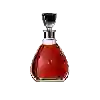
Winery GICBBanyuls Traditionnel Vin Doux Naturel
 Natural sweet wine
This wine generally goes well with beef and mature and hard cheese.
Food and wine pairings with Banyuls Traditionnel Vin Doux Naturel
Pairings that work perfectly with Banyuls Traditionnel Vin Doux Naturel


Original food and wine pairings with Banyuls Traditionnel Vin Doux Naturel
The Banyuls Traditionnel Vin Doux Naturel of Winery GICB matches generally quite well with dishes of beef or mature and hard cheese such as recipes of beef with onions chinese style or farfalle à la montagnarde.
Details and technical informations about Winery GICB's Banyuls Traditionnel Vin Doux Naturel.
Discover the grape variety: Zweigelt
Intraspecific crossing between the saint laurent and the limberger realized in 1922 and in Austria by Fritz Zweigelt (1888/1964) who named it rotburger. Very well known in Austria, it can be found in most Eastern countries, Japan, Germany, Great Britain, the Netherlands, Belgium, Switzerland, Italy, Canada, the United States, etc. In France, it is not very well known and yet this variety has interesting qualities when vinified as a single variety for both red and rosé wines. - Synonyms: rotburger, klosterneuburger, zweigelt blau, blauer-zweigelt in Germany, zweigeltrebe in Austria, Great Britain and the Czech Republic, blauer zwelgetrabe in Hungary, etc. (for all the synonyms of the grape varieties, click here !)
Informations about the Winery GICB
The Winery GICB is one of of the world's greatest estates. It offers 7 wines for sale in the of Banyuls to come and discover on site or to buy online.

The wine region of Banyuls
Banyuls wines come from the South-eastern Part of Roussillon, in the south of France, in the lower Pyrenees, a few kilometres from the Spanish border. These naturally Sweet wines are consumed both as an aperitif and as a dessert. They come in a wide range of hues, from GoldenGreen (Banyuls Blanc) to Amber (Banyuls Ambré) to the intense garnet of the standard Banyuls Rouge. Unusually among the natural sweet wines of France, all Banyuls wines are made primarily from Grenache grapes of various colors.
The wine region of Languedoc-Roussillon
Languedoc (formerly Coteaux du Languedoc) is a key appellation used in the Languedoc-Roussillon wine region of southern France. It covers Dry table wines of all three colors (red, white and rosé) from the entire region, but leaves Sweet and Sparkling wines to other more specialized appellations. About 75% of all Languedoc wines are red, with the remaining 25% split roughly down the middle between whites and rosés. The appellation covers most of the Languedoc region and almost a third of all the vineyards in France.
The word of the wine: Open
Said of a wine with a full and expressive nose, generally at its peak.