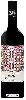
Winery Marks & SpencerBellota Tempranillo
 Red wine



In the mouth this red wine is a powerful with a lot of tannins present in the mouth.
This wine generally goes well with poultry, beef or veal.
Taste structure of the Bellota Tempranillo from the Winery Marks & Spencer
Light | Bold | |
Smooth | Tannic | |
Dry | Sweet | |
Soft | Acidic |
In the mouth the Bellota Tempranillo of Winery Marks & Spencer in the region of Estrémadure is a powerful with a lot of tannins present in the mouth.
Food and wine pairings with Bellota Tempranillo
Pairings that work perfectly with Bellota Tempranillo



Original food and wine pairings with Bellota Tempranillo

The Bellota Tempranillo of Winery Marks & Spencer matches generally quite well with dishes of beef, lamb or veal such as recipes of tournedos rossini with port sauce, doner kebab or beef tournedos with boursin.
Details and technical informations about Winery Marks & Spencer's Bellota Tempranillo.
Discover the grape variety: Tempranillo
The black Tempranillo is a grape variety native to Spain. It produces a variety of grape specially used for the elaboration of wine. It is rare to find this grape to eat on our tables. This variety of grape is characterized by medium-sized bunches and medium-sized grapes. The black Tempranillo can be found in several vineyards: South-West, Languedoc & Roussillon, Cognac, Bordeaux, Rhone valley, Provence & Corsica, Loire valley, Savoie & Bugey, Beaujolais.
Last vintages of this wine
The best vintages of Bellota Tempranillo from Winery Marks & Spencer are 2012, 2011
Informations about the Winery Marks & Spencer
The Winery Marks & Spencer is one of wineries to follow in Estrémadure.. It offers 455 wines for sale in the of Estrémadure to come and discover on site or to buy online.

The wine region of Estrémadure
Extremadura is one of the 17 administrative regions (officially "autonomous communities") of Spain. It is located in the Southwest of the country, on the border with Portugal. It is separated from Andalusia in the south by the Sierra Morena mountains, and from the Central plateau and Castile by the Sierra de Gata range. Extremadura is sparsely populated, but has an abundance of wildlife, such as deer, otters and even lynx.
The word of the wine: Paste
Characteristic of a thick and heavy wine with sticky tannins.