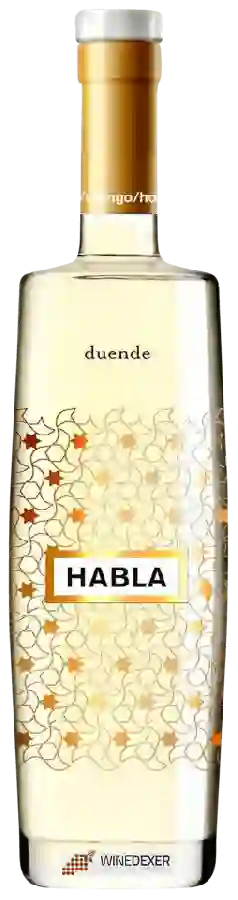
Winery HablaDuende
 White wine


In the mouth this white wine is a with a nice freshness.
This wine generally goes well with vegetarian, shellfish or goat cheese.

Taste structure of the Duende from the Winery Habla
Light | Bold | |
Dry | Sweet | |
Soft | Acidic |
In the mouth the Duende of Winery Habla in the region of Vinos de Pago is a with a nice freshness.
Food and wine pairings with Duende
Pairings that work perfectly with Duende



Original food and wine pairings with Duende
The Duende of Winery Habla matches generally quite well with dishes of shellfish, vegetarian or goat cheese such as recipes of periwinkles - the perfect cook!, quiche without pastry, courgette and blue cheese or pasta with 4 cheeses: mascarpone, gorgonzola, goat and emmental.
Details and technical informations about Winery Habla's Duende.
Discover the grape variety: Hibou blanc
Simple, fresh dry whites with a pale golden colour, a supple palate with moderate acidity, and understated aromas of citrus and white flowers. Rustic and discreet profile. Nearly extinct, preserved in INRAE varietal collections; testifies to the pre-phylloxera ampelographic diversity of the South-West and studied for its genetic interest. Rare French white variety, formerly grown in the South-West.
Last vintages of this wine
The best vintages of Duende from Winery Habla are 2017
Informations about the Winery Habla
The Winery Habla is one of of the world's great estates. It offers 48 wines for sale in the of Vinos de Pago to come and discover on site or to buy online.

The wine region of Vinos de Pago
Top of the Spanish quality pyramid (above DOCa and DO), reserved for 25 exceptional estates. Estate wines, grapes and vinification exclusively on site, 10 years of track record. All styles: concentrated, barrel-aged Cabernet, Syrah and Tempranillo reds (Dominio de Valdepusa, Arínzano, Pago de Otazu), maker's blends, a few ambitious whites. Great stylistic freedom.
The word of the wine: Secondary aromas
Aromas resulting from the fermentation and maturation of the wine before bottling. The aging in barrels modifies considerably the texture and the flavours of the wine.





