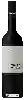
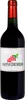
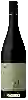
The Winery Fritz Walter of Pfalz
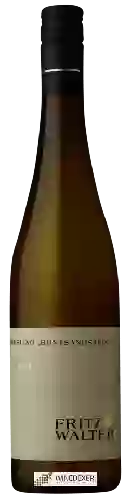
The Winery Fritz Walter is one of the best wineries to follow in Pfalz.. It offers 63 wines for sale in of Pfalz to come and discover on site or to buy online.
Looking for the best Winery Fritz Walter wines in Pfalz among all the wines in the region? Check out our tops of the best red, white or effervescent Winery Fritz Walter wines. Also find some food and wine pairings that may be suitable with the wines from this area. Learn more about the region and the Winery Fritz Walter wines with technical and enological descriptions.
How Winery Fritz Walter wines pair with each other generally quite well with dishes of pork, shellfish or spicy food such as recipes of brussels sprouts with bacon in a casserole, seafood pie or rougail sausage.
On the nose the white wine of Winery Fritz Walter. often reveals types of flavors of earth, tree fruit or citrus fruit and sometimes also flavors of tropical fruit, microbio or vegetal. In the mouth the white wine of Winery Fritz Walter. is a with a nice freshness.
Pfalz is a key wine producing region in western Germany, located between the Rhein/Rhine river and the low-lying Haardt mountain range (a natural continuation of the Alsatian Vosges). It covers a rectangle of land 45 miles (75km) Long and 15 miles (25km) wide. To the NorthLiesRheinhessen; to the South, the French border and Alsace.
In terms of both quality and quantity, Pfalz is one of Germany's most important regions, and one which shows great promise for the future.
An increasing proportion of Germany's finest Riesling and Pinot Noir (Spätburgunder) come from Pfalz Vineyards, and the region generates more everyday Landwein and Deutscher Wein than any other region by far (see German Wine Label Information).
With roughly 23,500 hectares (58,000 acres) of land planted to grapevines, Pfalz is the second-largest of Germany's 13 Anbaugebeite wine regions. Only its northern neighbor Rheinhessen has more vines. The region is home to some 10,000 vine growers, half of whom work as contractors, and is so densely planted that vines outnumber inhabitants 600 to one.
Pfalz's Vineyards produce both white wines (60 percent) and red (40 percent). The whites have long been the most successful and, as is standard almost everywhere in the Rheinland, Riesling dominates the local vineyards and wines. In 2013 the region had 14,000 acres (5,600 ha) of Riesling vines, accounting for roughly a quarter of its entire vineyard area.
Riesling is easily Germany's most successful grape variety, from the perspectives of both quality and quantity.
How Winery Fritz Walter wines pair with each other generally quite well with dishes of beef, lamb or pork such as recipes of monkfish armorican style, oriental stew with couscous or croque-monsieur.
On the nose the red wine of Winery Fritz Walter. often reveals types of flavors of red fruit, earth or oak and sometimes also flavors of citrus fruit. In the mouth the red wine of Winery Fritz Walter. is a with a nice freshness.
The white Chardonnay is a grape variety that originated in France (Burgundy). It produces a variety of grape specially used for wine making. It is rare to find this grape to eat on our tables. This variety of grape is characterized by small bunches, and small grapes. White Chardonnay can be found in many vineyards: South West, Burgundy, Jura, Languedoc & Roussillon, Cognac, Bordeaux, Beaujolais, Savoie & Bugey, Loire Valley, Champagne, Rhone Valley, Armagnac, Lorraine, Alsace, Provence & Corsica.
How Winery Fritz Walter wines pair with each other generally quite well with dishes of beef, lamb or pork such as recipes of beef tongue with pickle sauce, leg of lamb in a casserole or pan-fried black pudding with apples.
On the nose the pink wine of Winery Fritz Walter. often reveals types of flavors of microbio, tree fruit or spices and sometimes also flavors of red fruit, tropical fruit.
Bottle with a capacity of 3 litres.
Planning a wine route in the of Pfalz? Here are the wineries to visit and the winemakers to meet during your trip in search of wines similar to Winery Fritz Walter.
An intraspecific cross between Müller-Thurgau and Siegerrebe obtained in 1948 by Hans Breider (1908-1960) at the Bavarian Research Station for Viticulture and Horticulture in Veitsnöchheim (Germany). Almost unknown in France, it can be found in Germany, Belgium, England, the United States and Canada. Its early maturity and muscatel taste have sometimes led to it being offered as a table grape on market stalls.