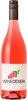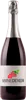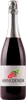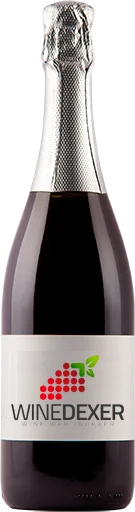
Winery FreixenetMia Secco Frizzante
 Sparkling wine
In the mouth this sparkling wine is a with fine and regular bubbles.
This wine generally goes well with appetizers and snacks, lean fish or shellfish.
Taste structure of the Mia Secco Frizzante from the Winery Freixenet
Light | Bold | |
Soft | Acidic | |
Gentle | Fizzy |
In the mouth the Mia Secco Frizzante of Winery Freixenet in the region of Castille is a with fine and regular bubbles.
Food and wine pairings with Mia Secco Frizzante
Pairings that work perfectly with Mia Secco Frizzante



Original food and wine pairings with Mia Secco Frizzante

The Mia Secco Frizzante of Winery Freixenet matches generally quite well with dishes of shellfish, appetizers and snacks or lean fish such as recipes of chinese noodles with shrimp, prunes with bacon or bouillabaisse like in marseille.
Details and technical informations about Winery Freixenet's Mia Secco Frizzante.
Discover the grape variety: Bouysselet
Resulting from a natural intraspecific crossing between the Savagnin and the Cauzette plant, the latter being close to the Tannat. It should be noted that it has very often been confused with the Saint Côme, it is true that we have noted some points of resemblance. Bouysselet is very old in the Haute Garonne, more precisely in Villaudric, where it almost disappeared, but has now been replanted to the great satisfaction of connoisseurs. It is registered in the Official Catalogue of wine grape varieties, list A1.
Informations about the Winery Freixenet
The Winery Freixenet is one of of the world's great estates. It offers 154 wines for sale in the of Castille to come and discover on site or to buy online.

The wine region of Castille
Castilla-La Mancha is a large region located South and east of the Spanish capital, Madrid. Inexpensive table wines are produced from a variety of Grapes. Higher quality wines are increasingly available, but the region is traditionally known as a source of low quality bulk wine. More than half of Spain's grapes are grown here.
The word of the wine: Tired
Wine that is too old, faded or has suffered from handling such as racking or bottling. In the first case it is too late, in the second case the wine must be put to rest for a few weeks in the cellar.