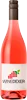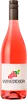
Domaine ThibaultCuvée Jacqueline Savy Faugères Rosé
 Pink wine
This wine generally goes well with vegetarian, appetizers and snacks or lean fish.
Food and wine pairings with Cuvée Jacqueline Savy Faugères Rosé
Pairings that work perfectly with Cuvée Jacqueline Savy Faugères Rosé



Original food and wine pairings with Cuvée Jacqueline Savy Faugères Rosé


The Cuvée Jacqueline Savy Faugères Rosé of Domaine Thibault matches generally quite well with dishes of pasta, vegetarian or appetizers and snacks such as recipes of roast beef in a foie gras and chanterelle crust, quiche lorraine or baked potato churros.
Details and technical informations about Domaine Thibault's Cuvée Jacqueline Savy Faugères Rosé.
Discover the grape variety: Sauterne
Intraspecific crossing between Sémillon Blanc and Sauvignon Blanc carried out in 1892 by Numa Naugé. This variety has been multiplied very little and is now in the process of disappearing.
Informations about the Domaine Thibault
The Domaine Thibault is one of of the world's great estates. It offers 4 wines for sale in the of Faugères to come and discover on site or to buy online.

The wine region of Faugères
Faugeres is an appellation in the Languedoc-Roussillon region of southern France. Although it also covers white and rosé wines, the appellation is best known for its Rich, ripe red wines made from the classic Rhone varieties of Syrah, Grenache and Mourvèdre, as well as the more MediterraneanCinsaut and Lladoner Pelut. The appellation covers the southern slopes of a series of hills only a few kilometres from the Mediterranean coast. The town of Faugeres forms the centre of the area, which extends 10 km from east to west.
The wine region of Languedoc-Roussillon
Languedoc (formerly Coteaux du Languedoc) is a key appellation used in the Languedoc-Roussillon wine region of southern France. It covers Dry table wines of all three colors (red, white and rosé) from the entire region, but leaves Sweet and Sparkling wines to other more specialized appellations. About 75% of all Languedoc wines are red, with the remaining 25% split roughly down the middle between whites and rosés. The appellation covers most of the Languedoc region and almost a third of all the vineyards in France.
The word of the wine: Grey (wine)
Wine obtained by vinifying white grapes with coloured skin (black or grey), by direct pressing, without maceration. It is a rosé with very little colour.