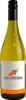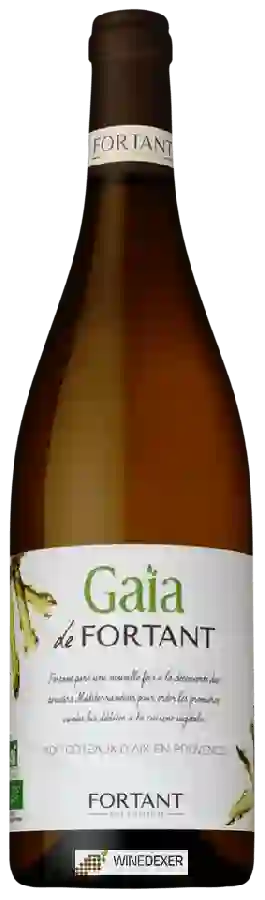
Winery FortantGaïa de Fortant Blanc
 White wine


This wine generally goes well with vegetarian, beef or rich fish (salmon, tuna etc).

Wine flavors and olphactive analysis

On the nose the Gaïa de Fortant Blanc of Winery Fortant in the region of Provence often reveals types of flavors of tree fruit.
Food and wine pairings with Gaïa de Fortant Blanc
Pairings that work perfectly with Gaïa de Fortant Blanc



Original food and wine pairings with Gaïa de Fortant Blanc


The Gaïa de Fortant Blanc of Winery Fortant matches generally quite well with dishes of beef, rich fish (salmon, tuna etc) or shellfish such as recipes of beef tagine with prunes and almonds, sophie's tuna cake or scallops.
Details and technical informations about Winery Fortant's Gaïa de Fortant Blanc.
Discover the grape variety: Mondeusehe
Light, lively whites to drink young with a pale golden colour, airy palate with preserved acidity, showing undemonstrative aromas of citrus and alpine white flowers. Discreet Savoyard profile. Very rare, preserved for its heritage value, part of the ancient alpine varieties studied for their genetic and ampelographic interest in French collections. Rare French white variety, sometimes given as a synonym for the Savoyard Mondeuse Blanche.
Last vintages of this wine
The best vintages of Gaïa de Fortant Blanc from Winery Fortant are 0
Informations about the Winery Fortant
The Winery Fortant is one of of the world's great estates. It offers 105 wines for sale in the of Coteaux d'Aix-en-Provence to come and discover on site or to buy online.

The wine region of Coteaux d'Aix-en-Provence
Provençal AOC between the Durance, Rhône, Mediterranean and Sainte-Victoire, 70% rosés. Fresh, fruity rosés with signature notes of strawberry, grapefruit, white peach, flowers and a garrigue touch, taut and thirst-quenching palate — the sunny Provençal aperitif. Supple reds blending Grenache, Syrah, Cinsault, Mourvèdre and Cabernet Sauvignon (spice, density, structure). Whites Rolle (Vermentino) and Clairette, ample with white flowers.
The wine region of Provence
World capital of dry, refined rosé (~90% of production). Pale rose-petal colour, delicate nose of fresh red fruits (strawberry, raspberry, redcurrant), citrus (pink grapefruit), white flowers and a mineral touch, taut and thirst-quenching palate — the Mediterranean aperitif par excellence. Blends of Grenache, Cinsault, Syrah, Tibouren and Mourvèdre. Fleshy Bandol reds from Mourvèdre (leather, garrigue, age-worthy), straight Cassis whites.
The word of the wine: Malolactic fermentation
Called second fermentation or malo for short. It is the degradation (under the effect of bacteria) of the malic acid naturally present in the wine into milder, less aggressive lactic acid. Some producers or wineries refuse this operation by "blocking the malo" (by cold and adding SO2) to keep a maximum of acidity which carries the aromas and accentuates the sensation of freshness.